Thrash vs. Death Metal vs. Metalcore: The Tempo, Vocals, and Tuning That Actually Separate Them
Thrash metal, death metal, and metalcore all get filed under one angry umbrella, but the real differences aren't about vibe — they're about drumming technique, vocal mechanics, and how low the guitars are tuned. This breakdown walks through all three axes, uses Carcass and Chuck Schuldiner's band Death as real-world test cases, and ends with a checklist you can run against any song you hear next.
Why Metal Fans Keep Mixing These Up
Metalheads argue endlessly about where thrash ends and death metal begins, and metalcore's boundaries are just as contested. Part of the confusion is genealogical: Wikipedia's own entry on death metal traces the genre's stylistic origins straight through thrash metal, first-wave black metal, and hardcore punk, the same hardcore-punk lineage that metalcore later leaned on.
But the differences are concrete, not mood-based, and they show up in three places you can actually listen for: tempo (and the drumming technique behind it), vocal technique, and guitar tuning. If you want the 10,000-foot view before narrowing in, our Metal quiz covers the whole genre family; this piece zooms into three of its most-confused branches.
| Subgenre | Tempo & Drumming | Vocal Technique | Tuning |
|---|---|---|---|
| Thrash metal | Fast, sustained picking: a sprint rather than death metal's start-stop switching | Shouted, often still semi-melodic | Standard tuning, or a step or two below |
| Death metal | Sustained blast beats and double-kick drumming, with abrupt shifts in tempo, key, and time signature | Deep growling vocals | Heavily distorted, low-tuned guitars: commonly drop C, sometimes drop B or lower |
| Metalcore | Hardcore-punk rhythms built around the breakdown, a deliberate stop-start passage rather than sustained speed | A trade-off between hardcore-style shouting/screaming and clean singing | Often extended-range 7- or 8-string guitars pushing further into low end |
Tempo: Thrash's Sprint vs. Death Metal's Blast vs. Metalcore's Stop-Start
Speed in metal is a drumming technique wearing a disguise, not one single thing. Death metal's signature is the blast beat, a technique used across thrash, death metal, black metal, and grindcore alike (grindcore itself drawing on hardcore punk). What makes death metal's version distinct is how relentlessly it's deployed: Wikipedia's death metal entry describes the genre's drumming as "aggressive, powerful," featuring "double kick and blast beat techniques" alongside "abrupt tempo, key, and time signature changes." One guitar-lesson breakdown of the style calls death metal "schizophrenic" for exactly this reason: it can "plod through an achingly slow riff and then flick a switch into alternate picking mayhem."
Thrash metal built its reputation on a more consistent, galloping sprint rather than that start-stop switching, closer in spirit to the straightforward, high-energy attack of earlier heavy metal, just faster and rawer. Metalcore flips the formula again: instead of chasing raw tempo, it organizes songs around hardcore-punk rhythm patterns and deliberate tempo drops, most famously the breakdown (more on that shortly). "Fast" is not the same animal in any of the three.
Vocal Technique: Shouted, Growled, or Both
The "angry voice" shorthand hides three genuinely different techniques. Thrash vocals tend to be shouted and semi-melodic: aggressive, but still recognizably sung, with pitch you can follow. Death metal trades that for what Wikipedia's entry simply calls "deep growling vocals," a guttural technique pitched low enough that lyrics often dissolve into texture, which is part of the point.
Metalcore sits in the middle by design, because it was never purely a metal vocal style to begin with. As Loudwire's Philip Trapp writes, metal purists argue metalcore is "closer to hardcore due to its vocal styles and rhythms" than to traditional metal. The genre fuses hardcore-punk shouting and screaming with passages of clean singing, a trade-off that's become one of metalcore's most-debated signatures.
Tuning and Tone: Standard, Dropped, or Buried in Low End
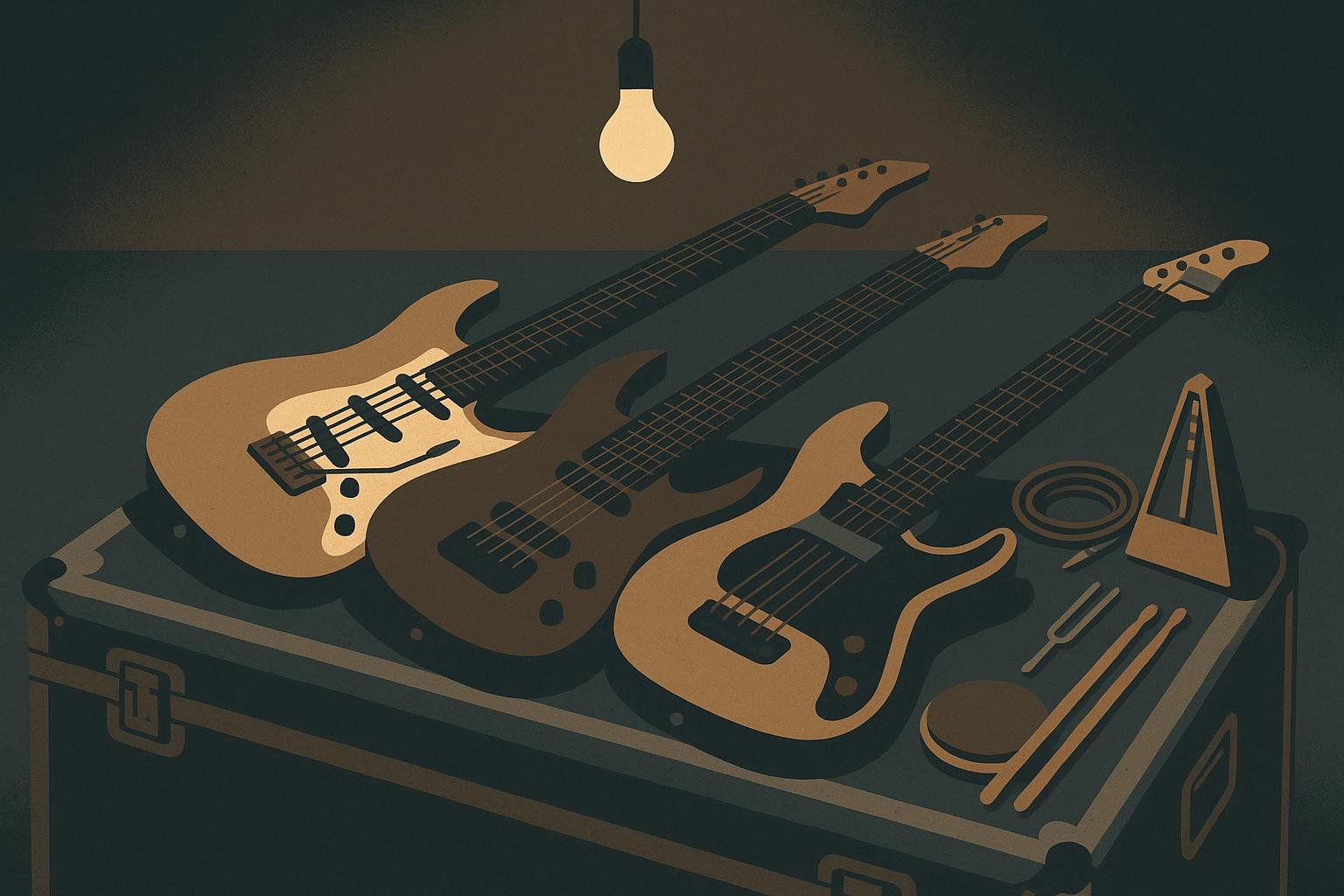
Tuning is where the genres' low ends physically diverge. Thrash metal largely stays close to standard tuning or a step below, keeping fast riffs articulate. Death metal drops further: Wikipedia describes the genre's guitars as "heavily distorted and low-tuned," and guitar-lesson site Fretjam gets specific, noting death metal is commonly played in drop C, with "a lot of death metal guitar... played in drop (or standard) B or even lower." Tuning that low requires thicker strings (Fretjam recommends at least a .52 gauge low string) just to keep the riff from flopping.
Melodic death metal complicates the picture. Carcass's 1993 album Heartwork paired that low-tuned heaviness with harmonic, almost traditional-metal melody lines, and is now often cited as a touchstone for the Gothenburg scene that followed: At the Gates, In Flames, Dark Tranquillity.
Metalcore, meanwhile, often skips death metal's drop tunings in favor of sheer range: many bands reach for extended 7- and 8-string guitars, trading tuning tricks for more low end built into the instrument itself.
Subgenre Quiz
Think you know Death Metal?
Listen to real song clips and prove it — free, no signup needed.
The Breakdown: Why Only Metalcore Has One
Metalcore's family tree explains its one truly unique move. Wikipedia's metalcore entry lists hardcore punk and "tough guy hardcore" as stylistic parents alongside heavy metal and groove metal. That hardcore DNA shows up structurally, not just sonically. Loudwire frames it bluntly: metalcore's "punk elements and different song structures" make it "a far cry from the sound of traditional metal," and one of metal's signature moves (the guitar solo) is "all but forgotten in much of metalcore."
In its place, metalcore builds toward the breakdown: a stripped-down, tempo-dropped passage designed for moshing, not shredding, a structural move borrowed wholesale from the same scene tested in our Hardcore quiz. Thrash and death metal songs, by comparison, are built around riff development and tempo shifts within a more continuous metal framework; they don't pause for a dedicated mosh section the way metalcore does. It's also why metalcore spun off mathcore, a subgenre built on even more extreme structural shifts, while thrash and death metal's offshoots (brutal, technical, melodic death metal) branch off from playing technique instead.
Case Study: How Death Mutated Thrash Into Death Metal
No band makes the thrash-to-death-metal pipeline more audible than Death, the Florida band fronted by Chuck Schuldiner, widely regarded as death metal's own point of origin. That fits: Wikipedia's death metal entry pins the genre's cultural origins to the mid-1980s U.S., "primarily Florida and the San Francisco Bay Area."
Track the catalog and you can hear the mutation happen in real time. "Evil Dead," from 1987, still carries thrash's raw, sprinting attack: fast, shouted, relatively straightforward.
By 1993's "The Philosopher," the vocals have dropped into a lower, more guttural register, the tempo lurches between sections instead of just sprinting, and the riffs lean on the lower-tuned, blast-beat vocabulary that Wikipedia and Fretjam both describe as death metal's baseline. Same band, same songwriter, but all three axes (tempo, vocal register, tuning) have shifted in the same direction.
Hear It For Yourself: A Listening Checklist
Run the three axes against anything you queue up next:
- Tempo: A sustained sprint (thrash), a sustained blast beat with sudden tempo/key/time-signature lurches (death metal), or a hardcore groove that keeps slowing down on purpose (metalcore)?
- Vocals: Shouted but still melodic (thrash), a deep, guttural growl (death metal), or a shout/scream-and-clean-singing trade-off (metalcore)?
- Tuning: Standard or a step down (thrash), drop C or lower (death metal), or extended-range low end (metalcore)?
Run that checklist against the Death Metal quiz and you'll start hearing the technique instead of just the noise.
Quick Check: Tempo, Vocals, Tuning
0/3Which subgenre's drumming is defined by sustained blast beats paired with abrupt tempo, key, and time-signature changes?
What does Wikipedia's death metal entry use to describe the genre's vocal approach?
Which structural move, borrowed from hardcore punk, is considered metalcore's signature and is largely absent from thrash and death metal songwriting?
Subgenre Quiz
Think you know Death Metal?
Listen to real song clips and prove it — free, no signup needed.
Frequently asked questions
What's the easiest way to tell thrash, death metal, and metalcore apart at a glance?
Listen for three things: tempo and drumming technique, vocal style, and guitar tuning. Death metal leans on blast beats, deep growls, and heavily distorted, low-tuned guitars; metalcore trades sustained speed for hardcore-style breakdowns and a mix of screamed and clean vocals; thrash sits closer to a fast, consistently sprinting, shouted style.
Is metalcore actually a metal subgenre?
It's genuinely debated. Metalcore fuses heavy metal with hardcore punk and tough-guy hardcore, and Loudwire notes that metal purists often argue it's closer to hardcore because of its vocal styles and rhythms, while others point to its heavy, aggressive guitar riffs as proof it belongs in the metal family.
What makes a death growl different from a scream?
Wikipedia's death metal entry describes the genre's vocal approach simply as deep growling vocals, a low, guttural technique distinct from the higher-pitched shouting and screaming more common in thrash and hardcore-descended genres like metalcore.
Why do death metal guitars sound so much lower than thrash?
Tuning. Guitar-lesson site Fretjam notes death metal is commonly played in drop C or lower, sometimes drop B, which requires heavier-gauge strings just to stay in tune. Standard thrash tuning sits much closer to normal guitar tuning, which keeps fast picking articulate.
What is a breakdown, and why is it mostly a metalcore thing?
A breakdown is a deliberately slowed, stripped-down passage built for moshing rather than soloing, and it comes straight out of metalcore's hardcore-punk lineage. Thrash and death metal are built more around continuous riff and tempo development, so they don't rely on that same structural device.
Sources
- Death metal — Wikipedia
- Metalcore — Wikipedia
- Is Metalcore Metal? — Loudwire
- Did Carcass's 'Heartwork' Inspire 'The Gothenburg Sound'? Bill Steer Weighs In — Blabbermouth.net
- Death Metal Guitar Lesson - Blast Beats & Fast Picking — Fretjam