The Best Car Songs for Kids, by Age Group: What Actually Keeps a Backseat Singing Instead of Screaming
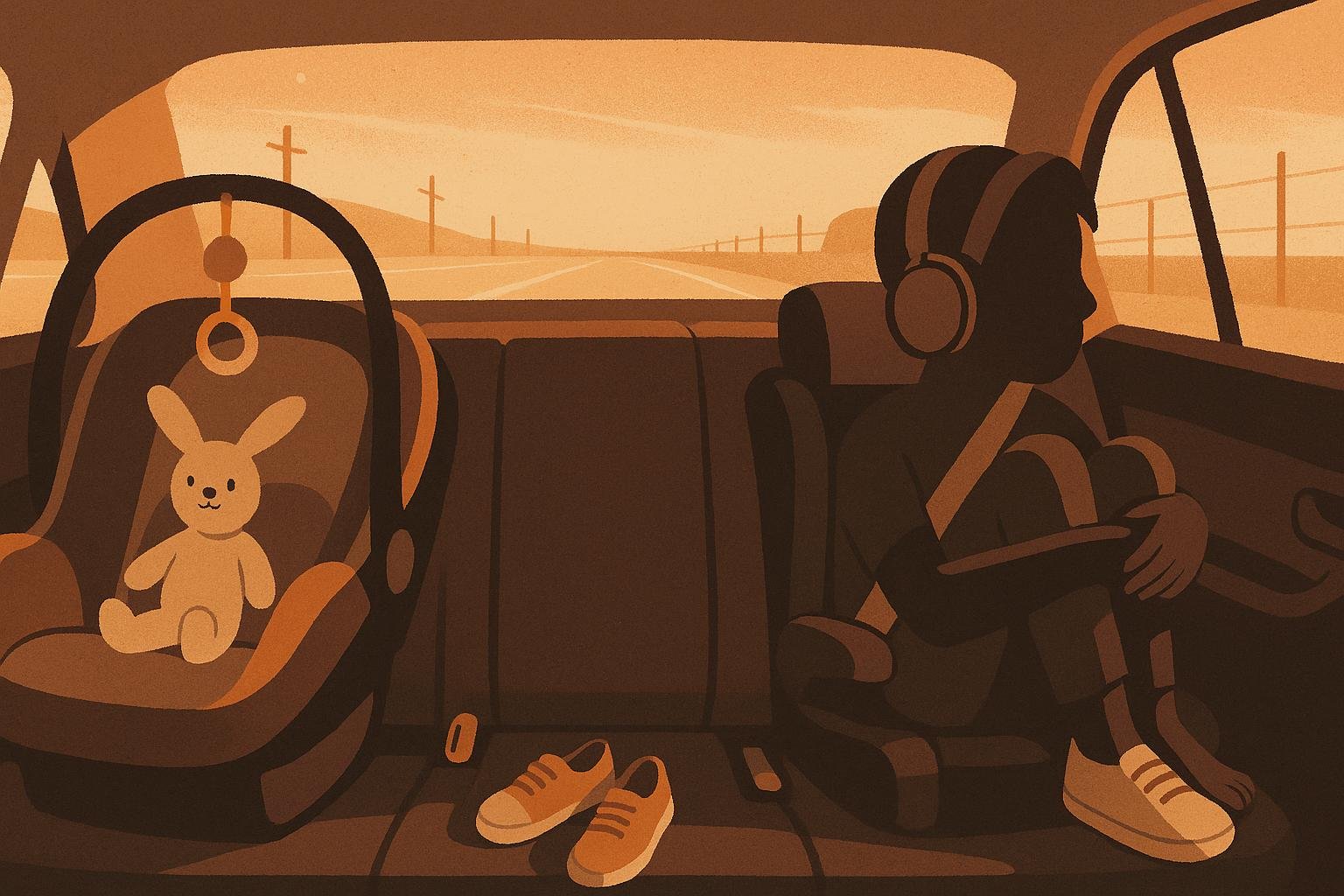
Most roundups of the best songs for kids to sing are just nostalgia dumps — whatever the writer loved at seven. That ignores the real variable: a 2-year-old and a 10-year-old fail a car song for completely different reasons. Sorted by attention span, vocal range, and song structure, here's what actually works at each age, mile after mile.
Why Age Beats Nostalgia in a Car Song
Type "best songs for kids" into any parenting blog's search bar and you get the same list, recycled: whatever the writer loved at seven, repackaged as universal. That's backwards. A 2-year-old and a 10-year-old don't fail a car song for the same reason, and once you know why, picking the best songs for kids to sing stops being a guessing game.
Three things actually decide whether a backseat sings or screams:
- Attention span — how long before the kid's brain checks out of the song entirely.
- Vocal range — whether the melody sits where an untrained kid voice can actually sing it.
- Song structure — whether something familiar comes back often enough to keep a kid locked in.
Genre and decade matter far less than those three, and so does whether it's technically a "children's song."
Ages 1–3: Call-and-Response Is the Only Structure That Works
A toddler cannot hold a verse-chorus-verse song in their head. What a toddler can do is echo a line straight back to you the second you sing it. That's the entire engine behind the most durable format in children's music: call-and-response.
It's not a coincidence that it works. ZERO TO THREE's research on infant music development notes that babies as young as five months can already tell happy music from sad music, and that singing about feelings (they point to "If You're Happy and You Know It") is one of the first ways toddlers learn to name their own emotions. A toddler isn't tracking lyrics like a story. They're following a loop of sound and feeling they can latch onto.
Call-and-response gives them a loop to join instead of just listen to, and it works best paired with a narrow melody, close to a toddler's own speaking pitch. A tune that leaps around loses them just as fast as one with no echo line does.
For this age, skip anything with a bridge. Look for songs built entirely out of a repeated line you sing and they echo back.
Ages 4–5: The Repetitive Chorus Takes Over
Somewhere around four, kids graduate from needing a line echoed back to holding an entire chorus in their head, just not a full song yet. This is the age the classic children's-album formula was built for. Raffi's 1980 album Baby Beluga runs on it: a short, hummable title track about a young whale, padded out with repetition-heavy staples like "This Old Man" and the traditional call-and-response cousin "Kumbaya." None of those songs ask a 4-year-old to track a plot. They ask for one phrase, repeated until it's memorized by accident.
The tell that a song is right for this age: if you can hum just the chorus and a 5-year-old can finish it, it's a keeper. If the song needs a verse to make sense, or a melody that jumps outside a narrow, speech-like range, it's not there yet.
Ages 6–8: Vocal Range Opens Up, But the Hook Still Has to Reappear Fast
By first and second grade, kids' voices can handle real melodic range instead of the narrow, speech-close pitches toddlers manage. This is the age window where actual pop songs start to work, but only the ones where the hook comes back on a short clock. A 7-year-old can follow a verse now, but they need the payoff to return within roughly a minute or they drift.
Billy Joel's 1983 hit "Uptown Girl" works for this age: the title line is also the hook, it recurs constantly, and the melody has enough lift to be fun to belt without asking a kid to nail anything vocally demanding.
The song doesn't need to be written for kids. It just needs the hook to come back often enough. The Pop quiz is a quick way to test which choruses land with this age.
Genre Quiz
Think you know Folk / Acoustic?
Listen to real song clips and prove it — free, no signup needed.
Ages 9–12: Attention Span Catches Up, But 'Kid Music' Itself Becomes the Problem
Tweens can track a full song, start to finish, the way an adult does. The attention-span problem is basically solved by 9 or 10. What replaces it is a taste problem: a tween will tune out a song the instant it sounds like it was made for someone younger than them, regardless of how simple or hard it is to sing.
This is where you can graduate the car playlist into songs that are legitimately good, not just legitimately easy. Jason Mraz's 2012 single "I Won't Give Up" is a clean example: simple, repeated chorus, an uplifting lyric a tween can get behind, and nothing about it screams "this was programmed for a children's app."
| Age Range | Attention Span | Best Song Structure | Comfortable Vocal Range | Example Pick |
|---|---|---|---|---|
| 1-3 | One line or loop, not a full verse | Call-and-response, "repeat after me" | Narrow, close to speaking pitch | Ella Jenkins-style singalongs |
| 4-5 | Most of a short chorus | Repetitive chorus, simple counting/naming songs | Still narrow, short melodic phrases | Raffi's "Baby Beluga," "This Old Man" |
| 6-8 | A couple of minutes, if the hook returns fast | Verse + chorus, hook every 45-60 seconds | Wider range, can handle a few big leaps | Billy Joel, "Uptown Girl" |
| 9-12 | Full song length | Full song structure, just not "kiddie" | Near-adult range | Jason Mraz, "I Won't Give Up" |
The 60-Second Test: How to Vet a Song Before It Goes on the Playlist
Before you commit a song to a two-hour drive, play the first minute and check three things:
- Structure — does the hook or chorus show up inside roughly the window that age group needs (immediately for toddlers, within a minute for grade-schoolers)?
- Range — are you asking a small voice to leap further than it comfortably can, or stay flat long enough to get boring?
- Length — will the attention span in the seat actually make it to the end, or is this a song built for someone five years older or younger?
If a song fails even one of those for the kid you're playing it for, that doesn't make it a bad song. It's just wrong for that seat right now.
Building One Playlist That Covers Every Age in the Back Seat
With a 4-year-old and a 10-year-old in the same car, the trick is sequencing, not finding songs that satisfy both at once. Open with a call-and-response or chorus-heavy track to hook the younger kid early, then use a hook-forward, wider-range song as a bridge both ages can hold onto, and let the tween's "real song" tracks come later in the drive once everyone's settled in. It's the same sequencing logic behind building a road trip playlist mile by mile.
For families who lean folk and acoustic, the Folk / Acoustic quiz is a quick gut-check for which chorus-forward songs in that catalog hold up as drive music.
Genre Quiz
Think you know Folk / Acoustic?
Listen to real song clips and prove it — free, no signup needed.
Frequently asked questions
What are the best songs for kids to sing in the car?
It depends entirely on age. Toddlers sing best to call-and-response songs where they echo a line back to you, preschoolers lock onto a repetitive chorus, grade-schoolers need a strong hook returning every 45-60 seconds, and tweens want full real songs that don't sound like 'kid music.' A song that's a hit for one age group can be unsingable for another.
Why won't my toddler sing along to a full song?
At 1-3 years old, kids can't yet hold a verse-chorus-verse structure in their head. What they can do is echo a line right back to you, which is why 'repeat after me' songs like the ones Ella Jenkins built her career on outlast everything else at this age.
At what age can kids sing a wider melodic range?
Around ages 6-8, kids' vocal range opens up and they can handle melodies with bigger leaps than a toddler's narrow, speech-like range. They still need the chorus to come back quickly, roughly every minute, or they lose the thread of the song.
Why does my tween refuse to sing kids' songs even though they're good singers now?
By 9-12, attention span has caught up to adult length, so tweens can track a full pop or folk song structure without a problem. The thing that kills it isn't the song length. Most 'kids' playlists still sound babyish, and tweens want real songs, not songs made for little kids.
How do I know if a song will work before I add it to a road trip playlist?
Run the 60-second test: play the first minute and check whether the structure matches the age group, whether the melody sits in a comfortable range for that kid's voice, and whether the hook or chorus shows up soon enough. If all three line up, it earns a spot on the drive.
Sources
- Beyond Twinkle, Twinkle: Using Music with Infants and Toddlers — Zero to Three
- Ella Jenkins, the first lady of children's music, has died at 100 — NPR (via MPR News)
- Baby Beluga — Wikipedia