Why Rain Is Pop Music's Favorite Metaphor: The Songwriting Trick Behind 'Purple Rain' to 'Rainy Days and Mondays'
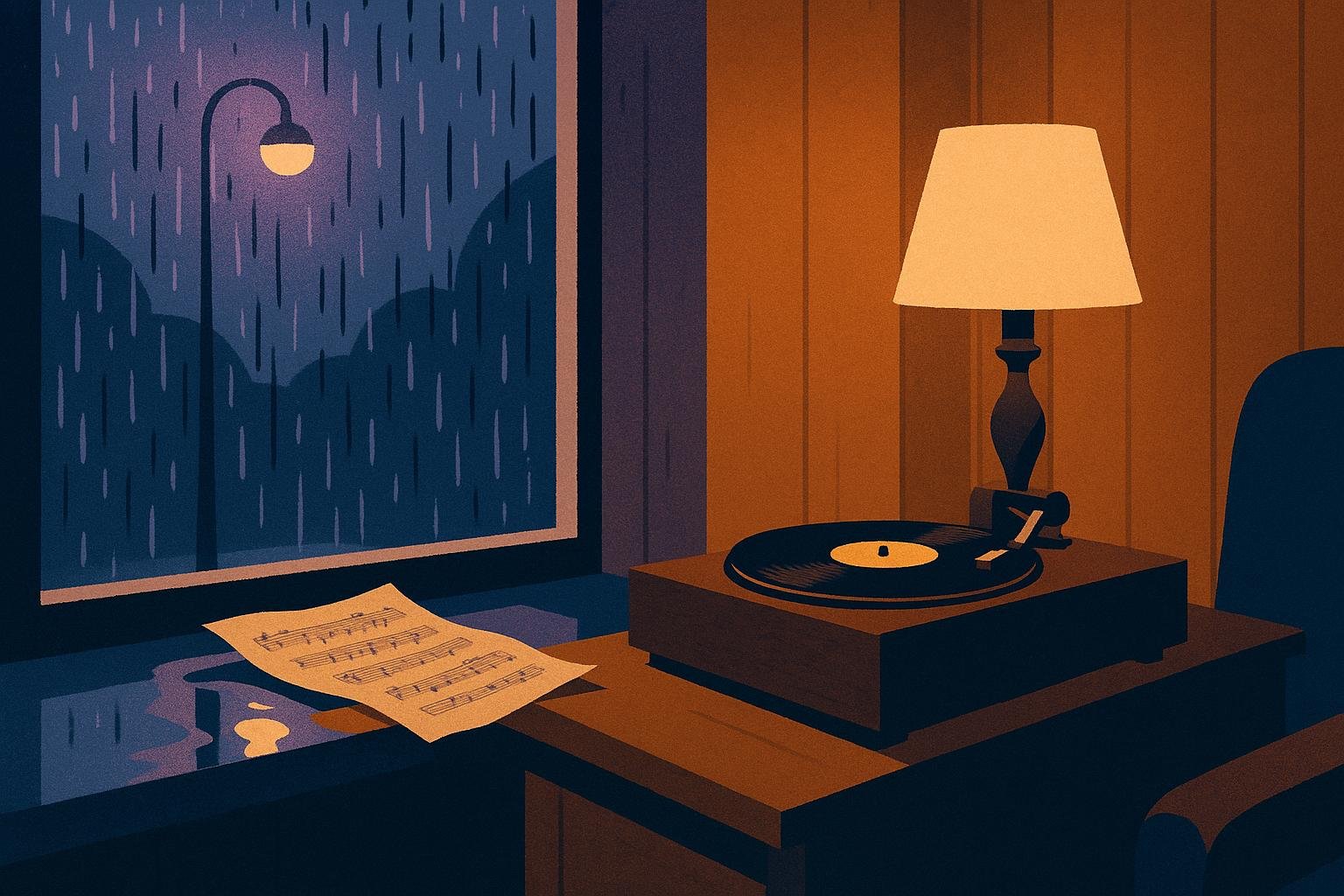
Rain-song listicles are everywhere, but none explain why. The answer is a 19th-century literary trick called pathetic fallacy, and once you know the term, you can hear it working in four very different hits — from the Carpenters' quiet depression to Prince's parting blessing.
What Pathetic Fallacy Actually Means
Every "songs about rain" list on the internet will hand you fifty titles and zero explanation. Here's the explanation: songwriters reach for rain because of a 19th-century literary trick called pathetic fallacy, a term coined by the British critic John Ruskin to describe writers handing their own emotions to something that can't actually feel them. Ruskin originally meant it as a criticism of Romantic poets who, in his view, got sentimental about nature. The word "pathetic" here has nothing to do with "lame"; it comes from the Latin pathos, meaning feeling. "Fallacy" comes from fallax, meaning false. Put together: a deliberate, useful falsehood, where a wave gets called "angry" or a sky gets called "weeping" so the listener feels something the writer never has to spell out.
Pathetic fallacy is a specific flavor of personification, the broader habit of giving human traits to non-human things. What separates it is the emotional charge: calling waves "winking" is just personification, but calling a sky "sobbing" is pathetic fallacy, because it borrows a feeling. Rain is the most efficient version available to a songwriter: it already sounds like crying, and it already darkens a scene in three seconds of sound design. It also means something to anyone who's ever been caught outside in a bad mood.
Grief in the Downpour
Paul Williams and Roger Nichols wrote "Rainy Days and Mondays" for the Carpenters in 1971, and the lyric most people quote, "What I've got they used to call the blues," was a late addition Williams scribbled in the car on the way to pitch the song, because he needed a line that mentioned sadness without using the word. He has said it became his favorite line in the whole song. That instinct is the entire point of pathetic fallacy: the Carpenters' version of depression never announces itself, it hides behind weather. "Rainy days" do the emotional labor that "I'm depressed" never could in a pop single built for AM radio, and the song became one of the duo's signature hits.
Rain as Catharsis and Forgiveness
Thirteen years later, Prince flipped the same image into something closer to a benediction. "Purple Rain" closed the album and movie of the same name, recorded live at Minneapolis's First Avenue on August 3, 1983, the night Prince debuted his new band, The Revolution, in front of a crowd so unfamiliar with the brand-new songs that the applause heard on the finished track had to be dubbed in afterward. The strings were added later at Sunset Sound. Purple rain, as Prince built it that night, is a parting blessing, not a storm to survive: the sky crying so the person leaving doesn't have to. Purple Rain spent 24 weeks at No. 1 on the Billboard 200, one of only eight albums ever to do that, and the album is now certified Diamond (13x Platinum) in the US.
Rain as Rage You Can Burn Away
Adele and producer Fraser T. Smith wrote "Set Fire to the Rain" out of a real fight: Adele and her then-boyfriend were arguing in a restaurant, she stormed outside to smoke so he wouldn't see her cry, and it was raining too hard to light the cigarette. The title sounds mystical; the memory behind it is just a woman standing in weather that wouldn't cooperate. But the songwriting move is the same pathetic-fallacy trick used in reverse: instead of letting rain represent sadness passively, Adele's narrator declares war on it. You can't actually set fire to rain, which is exactly why the line works. It's a vow to destroy an emotion that physics says is indestructible. The song gave Adele a third Hot 100 No. 1 off 21, an album that went on to sell roughly 14 million copies in the US alone.
Rain as Memory and Renewal
John Fogerty wrote Creedence Clearwater Revival's "Have You Ever Seen the Rain" in 1970 while watching his band fall apart; his brother and bandmate Tom Fogerty would leave the group within the year. "That song is really about the impending breakup of Creedence," Fogerty told Rolling Stone in 1993. "You can have a bright, beautiful, sunny day, and it can be raining at the same time." That paradox, sun and rain in the same moment, is why this entry doesn't fit neatly into grief or catharsis. It's rain as uncertainty: something ending while something else, unnamed, keeps shining. The single only reached No. 8 on the Hot 100 on release, modest by CCR's standards, but it has since become the band's single biggest streaming song, passing 2 billion plays on Spotify and returning to Billboard's charts more than five decades after it came out.
| Song | Year | Peak Chart Position | Certification / Legacy |
|---|---|---|---|
| "Rainy Days and Mondays" — The Carpenters | 1971 | No. 2, Billboard Hot 100 | Signature hit of the Carpenters' breakout run |
| "Purple Rain" (album) — Prince and The Revolution | 1984 | No. 1, Billboard 200 (24 weeks) | Diamond — 13x Platinum, RIAA |
| "Set Fire to the Rain" — Adele | 2012 | No. 1, Billboard Hot 100 | Parent album 21: ~14 million US copies sold |
| "Have You Ever Seen the Rain" — Creedence Clearwater Revival | 1970 | No. 8, Billboard Hot 100 | 2+ billion Spotify streams, CCR's top streaming song |
Genre Quiz
Think you know Pop?
Listen to real song clips and prove it — free, no signup needed.
One Image, Four Emotions, Every Genre
Line those four up and the genre map looks almost random: adult-contemporary soft rock, Minneapolis funk-pop, arena-ready piano balladry, swamp-rock that became classic-rock radio furniture. Pathetic fallacy covers a fifth emotion none of those four reach: romance. Brian Wilson wasn't writing about rain in "God Only Knows," but the Beach Boys' orchestral pop song runs on the exact same device, dressing a plain, almost childlike declaration of love in strings arranged to feel like weather moving through the room. Grief, rage, and renewal get storms; romance gets a swell of strings instead.
The technique didn't retire with vinyl. It just started reaching for new weather: Taylor Swift's "august," from 2020's folklore, swaps literal rain for hazy, fading summer light to do the same job pathetic fallacy has always done, letting the season carry feelings the lyric never states outright.
The Commercial Case for a Cliché
"Rain song" is one of the most mocked categories in pop songwriting, dismissed as an easy crutch since long before streaming existed. The numbers disagree. A song that leans on a 170-year-old literary device still produced a 24-week No. 1 album that's now Diamond-certified. It also produced a Hot 100 chart-topper built on a true story outside a restaurant, and a 1970 single still climbing Billboard's global charts decades after release. Pathetic fallacy keeps clearing the commercial bar because it does the emotional work efficiently: the same three seconds of weather can signal grief, forgiveness, rage, or uncertain hope, depending on which songwriter reaches for it.
The device is the hook, not the weather. Put that ear to work on our Pop quiz and see how many pathetic-fallacy classics you can name from a 30-second clip. Fans of the device in other genres can chase it into Prince's world on the Funk quiz or into CCR's on the Classic Rock quiz. And if rain-as-metaphor got you thinking about pop's other favorite emotional shortcuts, our pieces on songs about dogs and songs about friendship cover two more.
Test Your Pathetic Fallacy Knowledge
0/3What is the literary term for giving human emotion to weather?
Which song uses rain as a parting blessing rather than a sorrow?
Which song's rain lyric came from a real argument outside a restaurant?
Genre Quiz
Think you know Pop?
Listen to real song clips and prove it — free, no signup needed.
Frequently asked questions
What is pathetic fallacy in songwriting?
Pathetic fallacy is a literary device, coined by critic John Ruskin, where a writer gives human emotions to something non-human, like weather. In songwriting it lets rain, sun, or storms carry a feeling the lyric never states directly.
Why do so many songs use rain as a metaphor?
Rain is an efficient emotional shorthand: it already sounds like crying and darkens a scene instantly, so songwriters use it to signal grief, forgiveness, rage, or renewal without spelling out the feeling in words. It's a specific form of personification with a feeling borrowed in, not just human traits handed over.
Is 'Rainy Days and Mondays' about depression?
Yes. Writers Paul Williams and Roger Nichols built the song around hidden sadness, including the line 'What I've got they used to call the blues,' which Williams added last-minute specifically to reference sadness without naming it outright.
What inspired Adele's 'Set Fire to the Rain'?
Adele wrote it about a real argument with a then-boyfriend in a restaurant; she went outside to smoke in the rain so he wouldn't see her upset. The title turns that literal, frustrating rain into a metaphor for burning away an emotion.
What is the best-selling 'rain' song or album?
Prince's Purple Rain album, which includes the title track, spent 24 weeks at No. 1 on the Billboard 200 and is certified Diamond (13x Platinum) in the US, one of only eight albums ever to hold the No. 1 spot that long.
Sources
- Pathetic Fallacy: Definition and Examples — LitCharts
- Purple Rain - album by Prince / The Revolution (1984) — GoldieSparade (Prince discography archive)
- Rainy Days And Mondays by Carpenters — Songfacts
- The Number Ones: Adele's 'Set Fire To The Rain' — Stereogum
- Creedence Clearwater Revival's 'Have You Ever Seen the Rain' Returns to Billboard Charts 56 Years Later — Yahoo Entertainment