What Is Progressive Rock? The Concept Albums, Time Signatures, and Side-Long Suites That Defined Prog
Casual listeners hear "prog rock" and think long songs. The genre King Crimson, Yes, and Emerson, Lake & Palmer built between 1969 and 1974 ran on three specific techniques instead: odd time signatures that break rock's usual four-beat pulse, concept albums built around one story, and classical and jazz vocabulary bolted onto rock instruments. Here's how each one works, and the records that introduced them.
More Than Long Songs
Ask a casual listener what "prog rock" means and you'll usually get some version of: songs that go on forever. That's not wrong, exactly, but it mistakes the symptom for the disease. The genre that crystallized in England between 1969 and 1974 was built on three specific, learnable techniques: odd time signatures that break rock's usual four-beat stride, concept albums that structure an entire LP around one idea instead of a run of singles, and a deliberate raid on the conservatory, classical and jazz vocabulary bolted onto electric rock instruments. Rolling Stone's own shorthand for the genre nails all three at once: "thick-as-a-brick concept albums, an early embrace of synthesizers, overly complicated time signatures, Tolkienesque fantasies." Length was just what happened when bands actually finished developing those ideas. Here's how each one works, and the records that proved it.
Odd Time Signatures and the Shifting Pulse
Most rock songs live in 4/4, four steady beats per bar, the pulse you can't help but nod along to. Prog bands treated that as one option among many. They wrote in 5/4 (five beats), 7/8 (seven beats, grouped unevenly), 9/8, and mixed meter (the real party trick), where a song slides between several of those within a single passage, so the "one" of the beat keeps landing somewhere new.
Yes's "Close to the Edge," the 18-minute title track of their 1972 album, is the textbook case. Written by Jon Anderson and Steve Howe and assembled section-by-section in a meticulous, democratic arrangement process at Advision Studios, the piece moves through what the magazine Goldmine described as "nature sounds, then cacophony, then uncommon rhythms." Tempo, mood, and instrumentation all shift underneath a four-movement structure inspired by Hermann Hesse's novel Siddhartha. The sessions were so exacting that drummer Bill Bruford found them "intensely laborious," a frustration that pushed him to quit Yes for King Crimson right before the album came out. That's the sound of a band treating rhythm as compositional material, not just a groove to settle into.
The Concept Album as the Genre's Backbone
If odd meters are prog's vocabulary, the concept album is its sentence structure. Instead of writing ten unrelated songs and sequencing the best ones into an LP, prog bands built the whole record around a single story, theme, or musical idea, meaning you were supposed to hear it start to finish, in order, the way you'd read a novel.
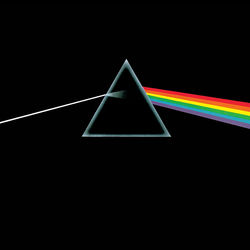
King Crimson set the template immediately. Their 1969 debut, In the Court of the Crimson King, is often cited as the first true progressive rock album. It's constructed around a sustained meditation on war, societal alienation, and the futility of resisting corrupt, unchecked authority, not a singles collection with a mood attached. It worked commercially as well as conceptually: the album hit No. 5 on the UK Albums Chart, No. 28 on the Billboard 200, went Gold, and Rolling Stone ranked it the second-greatest prog album ever made, behind only Pink Floyd's The Dark Side of the Moon. That Pink Floyd record is the form's most famous graduate: a single sustained meditation on mortality and pressure, with Clare Torry's wordless wail on "The Great Gig in the Sky" standing in for an emotion the rest of the album spends 40 minutes circling.
You can hear the structural ambition of records like these on LaLaQuiz's Progressive Rock quiz, or branch out to the broader Classic Rock catalog these bands grew out of.
Borrowing from the Conservatory: Classical and Jazz Fusion
The third pillar is instrumentation and vocabulary borrowed wholesale from outside rock. Rolling Stone flags prog's "early embrace of synthesizers" as a defining trait, and the clearest evidence is in the keyboards: on Close to the Edge, Rick Wakeman layered Mellotron (a tape-loop keyboard that could mimic strings, choirs, and brass) against a church organ, expanding Yes's sonic palette well past what a standard rock lineup could produce.
Emerson, Lake & Palmer took the fusion further by performing an actual classical piece as a rock set. Keyboardist Keith Emerson had attended an orchestral performance of Modest Mussorgsky's piano suite Pictures at an Exhibition years earlier and bought the score; by March 1971, the trio was performing a full rock adaptation of it live at Newcastle City Hall. The resulting live album, released in the UK that November and reaching No. 3 on the UK Albums Chart and No. 10 on the Billboard 200, closes with "Nut Rocker," a rock arrangement of Tchaikovsky's Nutcracker. It's prog's clearest proof of concept: a 19th-century Russian piano suite, rearranged for a rock band, selling as a rock record. Fans of that jazz-and-classical crossover might also enjoy LaLaQuiz's Jazz / Blues quiz for the other side of that borrowing.
| Year | Album | Artist | Technique introduced |
|---|---|---|---|
| 1969 | In the Court of the Crimson King | King Crimson | Mellotron-driven classical/jazz fusion built around a concept-album structure |
| 1971 | Pictures at an Exhibition | Emerson, Lake & Palmer | A full classical suite (Mussorgsky) adapted into a rock concert set |
| 1972 | Close to the Edge | Yes | A side-long, multi-movement suite built on shifting rhythms and tempo |
| 1973 | Larks' Tongues in Aspic | King Crimson | Polymeter, overlapping rhythmic patterns of different lengths played at once |
The Side-Long Suite: When One Song Fills a Whole Side of Vinyl
Put odd meters, a unifying concept, and classical ambition into one piece of music long enough, and you get the side-long suite, prog's most literal rebuttal to the "it's just long songs" complaint. The point was never duration for its own sake; it was that a composition this complex needed the room.
"Close to the Edge" is the genre's flagship example: 18 minutes and 43 seconds, occupying the entirety of side one of the original vinyl LP, built as a four-part suite rather than a jam. It was never released as a conventional single. In a recent ranking of the Top 20 Songs Longer Than 10 Minutes, the collector's magazine Goldmine named it the greatest long song of all time, writing that it's "almost a cliché — or I suppose more of a hard-fought point of agreement — that Close to the Edge is the greatest progressive rock album of all time."
Side two of the same album makes the contrast explicit: "And You and I" is pastoral and folk-tinged, "Siberian Khatru" is a hard-driving rocker, proof the band could still write a normal-length song. They just didn't think every idea belonged in one.
Subgenre Quiz
Think you know Progressive Rock?
Listen to real song clips and prove it — free, no signup needed.
The Albums That Built the Genre (1969–1974)
Lay the records out in order and the techniques stack up chronologically, each one pushing the last a little further:
- 1969: King Crimson, In the Court of the Crimson King. The template: concept-driven, Mellotron-soaked, jazz-and-classical-informed, and, per Rolling Stone's 50 Greatest Prog Rock Albums list, the No. 2 prog record of all time.
- 1971: Emerson, Lake & Palmer, Pictures at an Exhibition. Classical repertoire performed as a full rock set, charting at No. 3 UK and No. 10 US.
- 1972: Yes, Close to the Edge. The side-long suite perfected, hitting No. 3 on the Billboard 200 and eventually going platinum.
- 1973: King Crimson, Larks' Tongues in Aspic. A retooled lineup pushes into polymeter, layering rhythms of different lengths against each other.
By 1974, the prog vocabulary was set: concept albums, odd meters, classical borrowing, the side-long suite. Everything covered next, from King Crimson's own 1980s reinvention to TOOL's version of the same ideas decades later, was built on this five-year foundation.
Did it stick?
0/3Which description best matches how Goldmine characterized the structure of "Close to the Edge"?
Which embedded track comes from an album widely considered one of prog's defining concept records?
Which 1971 album first adapted an existing classical composition into a full rock arrangement?
Why Prog's DNA Still Shows Up Today
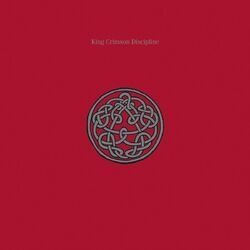
Prog never really went away. It just stopped needing the label. King Crimson itself proved that first: by 1981's Discipline, Robert Fripp had rebuilt the band around interlocking, polymetric guitar parts with new guitarist Adrian Belew, trading the Mellotron-era grandeur of 1969 for tighter, more angular math. "Elephant Talk," the album's opener, applies the same impulse, treating rhythm as a puzzle to be solved, in a completely different outfit more than a decade later.
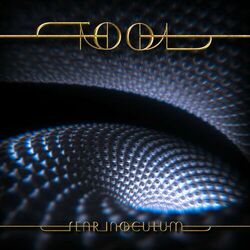
That same impulse is all over heavier, more recent bands who grew up on this catalog. TOOL built a career on exactly the techniques this piece covers: shifting meters, long-form compositions, full-album concepts. And "7empest," the nearly 16-minute closer to 2019's Fear Inoculum, is as direct a descendant of "Close to the Edge" as metal has produced.
If you want to hear where that lineage keeps going, LaLaQuiz's Metal and Experimental quizzes pick up threads this piece only has room to gesture at. And if genre explainers like this one are your thing, we've covered the same ground for shoegaze and indie rock too.
None of this is trivia you need to pass a test. It's the difference between hearing "Close to the Edge" as 18 minutes of noodling and hearing it as a four-movement composition built to fill a side of vinyl because the ideas needed the room. Put the techniques, and your ears, to the test on the Progressive Rock quiz below.
Subgenre Quiz
Think you know Progressive Rock?
Listen to real song clips and prove it — free, no signup needed.
Frequently asked questions
What is progressive rock, in simple terms?
Progressive rock, or prog rock, is a genre that emerged in England around 1969. It treats a rock album like a long-form composition rather than a set of singles, using concept albums, odd time signatures, and instrumentation borrowed from classical and jazz (Mellotron, organ, early synthesizers) to expand what a rock song could do.
What are some essential progressive rock bands?
King Crimson, Yes, and Emerson, Lake & Palmer are usually cited as the genre's founders. Rolling Stone ranked King Crimson's In the Court of the Crimson King and Pink Floyd's The Dark Side of the Moon as the two greatest prog albums ever made.
Is a long song automatically progressive rock?
No, length is a byproduct, not the definition. Yes's "Close to the Edge" runs 18 minutes and 43 seconds because it's a four-movement suite with shifting rhythms and tempo, not because the band stretched out a simple idea. That compositional ambition is why Goldmine named it the greatest long song ever recorded.
What makes a concept album different from a regular album?
A concept album is built around a single unifying story or theme across every track, meant to be heard start to finish, rather than a collection of individually written singles. King Crimson's 1969 debut, structured around war and societal alienation, is an early example that helped define the prog genre.
Is progressive rock still influencing music today?
Yes, bands like King Crimson's own 1980s lineup, heard on "Elephant Talk," and modern groups like TOOL continue to use the genre's core techniques, including odd time signatures and long-form, concept-driven compositions.
Sources
- 50 Greatest Prog Rock Albums of All Time — Rolling Stone
- In the Court of the Crimson King — Wikipedia
- Close to the Edge — Wikipedia
- Pictures at an Exhibition — Wikipedia
- Yes's 'Close to the Edge' Named Greatest Long Song, Lasting 18 Minutes and 43 Seconds — Yahoo Entertainment (citing Goldmine)