The Hardcore Punk Explosion: How DC, LA, and Boston Built American Underground Music

Hardcore punk didn't erupt from one scene — it ignited almost simultaneously in three American cities that barely spoke to each other. Los Angeles chased speed and chaos. Washington, D.C. built a DIY label and a sober ethic called straight edge. Boston watched both, then turned straight edge into a crew identity of its own.
Hardcore punk didn't erupt from one scene. It ignited almost simultaneously in three American cities that barely spoke to each other, each building its own sound and its own code. Los Angeles chased speed and chaos. Washington, D.C. built a do-it-yourself record label and a sober, all-ages ethic called straight edge. Boston watched both, then turned straight edge into a militant crew identity with its own uniform.
Three Cities, One Decade (1976-1986)
1976-77
Black Flag forms in Hermosa Beach
A handful of bored suburban LA kids start the band that will define hardcore's speed.
1978
Bad Brains forms in Washington, D.C.
The first hardcore punk band to form on the East Coast, fusing Ramones-style three-chord attack with funk and jazz fusion.
1979
Black Flag releases Nervous Breakdown
The SST debut EP that becomes LA hardcore's founding template.
1979
The Teen Idles form in DC
Ian MacKaye and Jeff Nelson's band becomes the seed of Dischord Records.
1980
Dischord Records launches; Minor Threat forms
Teen Idles' breakup money funds a DIY label; Minor Threat plays its first basement show that December.
1981
'Straight Edge' and SSD
Minor Threat's self-titled EP introduces the song 'Straight Edge'; Boston's SSD forms after catching Minor Threat live.
1982
This Is Boston, Not L.A.
Modern Method Records documents the Boston Crew scene on one defiant compilation.
1983
Minor Threat releases Out of Step, then splits
DC's clearest hardcore statement arrives right as the band that made it breaks up.
1985
Slapshot forms from Negative FX and DYS
Boston's crew bands start drifting toward straight heavy metal.
1986
Black Flag disbands
LA's founding hardcore band breaks up after years of stretching songs into Sabbath- and Dead-style jams.
Before the Scenes
Before any of it had a name, two bands were already pointed in the same direction from opposite coasts. Bad Brains formed in Washington, D.C. in 1978: vocalist H.R., guitarist Dr. Know, bassist Darryl Jenifer, and drummer Earl Hudson, pulling from Mahavishnu Orchestra, Black Sabbath, and the Ramones to build something faster and stranger than either. By most accounts they were the first hardcore punk band to form on the East Coast, and their arrival shook up DC's scene before Dischord Records even existed. Three thousand miles away, in the sterile LA suburb of Hermosa Beach, Black Flag was taking shape around the same stretch of years. Writer Steven Blush later called it the first full-fledged DIY punk group in the country, and credited its early-80s tours with creating the American hardcore circuit.
1979-1980: LA Goes First
Black Flag's debut EP, Nervous Breakdown (SST, 1979), set the template before "hardcore" even had a name. Four songs in barely more than four minutes ("Nervous Breakdown," "Fix Me," "I've Had It," "Wasted") turned suburban boredom into something that sounded like a fight breaking out. Original singer Keith Morris left soon after (he'd go on to front Circle Jerks, and later Off!). By the Ron Reyes era captured in Penelope Spheeris's documentary The Decline of Western Civilization, Black Flag had compressed five songs ("Jealous Again," "Revenge," "White Minority," "No Values," "You Bet We've Got Something Personal Against You!") into six minutes flat on the Jealous Again EP (1980). That ratio, songs per minute as a kind of dare, became LA hardcore's signature.
1980-1981: DC Builds Its Own Label
DC's scene had deeper roots than LA's: Georgetown University's freeform station WGTB, the Dupont Circle and Adams Morgan neighborhoods, and a short-lived venue called the Atlantis that hosted the city's first all-punk bill on January 27, 1978. The Atlantis closed, then reopened in 1980 as the 9:30 Club. By then, three members of a short-lived band called the Slinkees had regrouped in September 1979 as the Teen Idles, with bassist Ian MacKaye and drummer Jeff Nelson. Their 1980 EP, Minor Disturbance, was the earliest non-single release to come out of DC hardcore. When the Teen Idles broke up, MacKaye and Nelson took the money the band had earned and used it to start Dischord Records, a label built to put out their own records on their own terms. Minor Threat, formed later that year with guitarist Lyle Preslar and bassist Brian Baker, played its first show in December 1980 to about fifty people in a basement.
Straight Edge Is Born
Minor Threat's self-titled 1981 EP contained a song that outgrew the band almost immediately. "Straight Edge" described a simple personal stance (no alcohol, no drugs, no promiscuous sex) and became, in the years after, the basis of an entire straight edge hardcore movement that outlived the band by decades. AllMusic later called Minor Threat's catalog "iconic," and the label stuck for good.
Minor Threat - Live @ 9:30 Club, Washington, DC, 6/11/81 [FIRST SET] · YouTube
1981: Boston Watches, Then Builds a Crew
Boston already had a punk scene (Mission of Burma, the Neighbourhoods) but a handful of kids came home disheartened by it and electrified by a Minor Threat show in New York City in 1981. Feeling "enfranchised by straight edge," they started Boston's first hardcore band, SSD, which played its first show on September 19, 1981. The bands that formed in its wake, DYS and Negative FX especially, adopted straight edge not as one song's personal creed but as a group uniform: shaved heads, X's on hands, a closed-ranks identity that became known as the Boston Crew. Jerry's Kids, the F.U.'s, Gang Green, and the Freeze rounded out the scene (the Proletariat stood apart, trading hardcore's riffs for Gang of Four-style jangle and communist lyrics). Where DC treated straight edge as one man's lyric, Boston treated it as a membership card.
1982: The Landmark Year
By 1982, each city had produced, or was about to produce, the record that defined it. DC's self-sufficiency, LA's velocity, and Boston's crew identity each landed on vinyl within a year of each other.
| City | Band / Release | Year | Why It Mattered |
|---|---|---|---|
| Los Angeles | Black Flag — Damaged | 1981 | Turned Hermosa Beach's suburban aggression into hardcore's founding full-length statement |
| Boston | This Is Boston, Not L.A. (Modern Method compilation) | 1982 | Put SSD, DYS, Jerry's Kids, and the F.U.'s on one record and declared, in the title alone, that Boston wasn't LA's echo |
| Washington, D.C. | Minor Threat — Out of Step | 1983 | Dischord's clearest hardcore statement yet, built entirely on the label's own DIY terms |
Modern Method Records' choice of title for the Boston comp is the most literal flex of the bunch: a scene naming itself in direct opposition to the city that got there first.
Subgenre Quiz
Think you know Hardcore?
Listen to real song clips and prove it — free, no signup needed.
1983-1986: Sounds Diverge and Scenes Fracture
Hardcore's first wave didn't hold its shape for long. Black Flag spent the mid-80s doing almost everything its own fans hated: growing their hair out, slowing the tempos down, and stretching songs into Black Sabbath- and Grateful Dead-length jams on records like My War and Slip It In, rebelling against the "conformist subculture of raging thrash skinheads" the band itself had helped create. The supernova burned out in the summer of 1986. Boston's Crew bands scattered or changed direction. By 1986, many had either disbanded or started playing straight heavy metal, and in 1985 members of Negative FX and DYS regrouped as the more metal-leaning Slapshot, a shift worth hearing against the heavy metal quiz if you want the contrast. DC took a different fork entirely. Minor Threat broke up in 1983, and its members didn't quit hardcore. They spun off into Egg Hunt, Embrace, Skewbald/Grand Union, and eventually Fugazi, trading breakneck tempos for melody, dynamics, and overtly political lyrics during what's remembered as DC's Revolution Summer. That pivot toward slower, more emotionally direct hardcore is the one later tagged post-hardcore, and, further downstream, emo.
The Afterlife
Each city's export outlived its scene. DC's straight edge ethic became a durable, exportable lifestyle choice rather than a passing fashion. It's still a live identity in hardcore decades later. LA's speed and DIY infrastructure outlasted Black Flag itself: the band's label, SST Records, went on to release the Minutemen, Hüsker Dü, Meat Puppets, and Sonic Youth, effectively writing the rulebook for American indie rock. You can hear SST's fingerprints all over the indie rock quiz today.
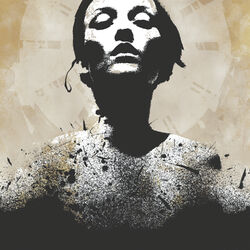
Boston's crew culture proved the most adaptable of all. Through the 1990s, extreme metal bled into the scene through bands like Converge and Cave In, pushing Boston hardcore toward what became metalcore.
By the mid-90s, a youth crew revival led by In My Eyes, Bane, and Ten Yard Fight pulled the scene back toward straight edge's original positivity. That lineage runs in a straight line to Have Heart, whose 2019 reunion show outside the Worcester Palladium drew the highest attendance of any hardcore show in history.
For more on how Boston's hardcore lineage hardened into modern metalcore, see our breakdown of thrash, death metal, and metalcore.
Subgenre Quiz
Think you know Hardcore?
Listen to real song clips and prove it — free, no signup needed.
Frequently asked questions
What city started hardcore punk?
No single city gets full credit. Bad Brains formed in Washington, D.C. in 1978 as the first hardcore band on the East Coast, while Black Flag was taking shape around the same time in Hermosa Beach, CA. Boston's hardcore scene followed close behind in 1981 with SSD.
What is straight edge hardcore?
Straight edge is a hardcore lifestyle built around not drinking alcohol, not using drugs, and avoiding promiscuous sex. It comes directly from Minor Threat's 1981 song 'Straight Edge,' which Ian MacKaye wrote about his own personal choices rather than as a rulebook. Other scenes, especially Boston's SSD and the Boston Crew, turned it into a shared group identity.
What was This Is Boston, Not L.A.?
It was a 1982 compilation on Modern Method Records documenting Boston's hardcore scene, including SSD, DYS, Jerry's Kids, and the F.U.'s. The title itself was a declaration that Boston's hardcore had its own identity distinct from Los Angeles's sound.
Is Black Flag a hardcore punk band?
Yes. Formed in the LA suburb of Hermosa Beach, Black Flag released the Nervous Breakdown EP in 1979 and the album Damaged in 1981, both considered foundational hardcore records. The band later slowed down and experimented with longer, Black Sabbath- and Grateful Dead-influenced songs before breaking up in 1986.
What happened to the Boston hardcore scene by 1986?
Many of the original Boston Crew bands either broke up or moved toward heavy metal by 1986. In 1985, members of Negative FX and DYS regrouped as the more metal-leaning Slapshot, a shift that helped set up Boston's 1990s metalcore wave with bands like Converge and Cave In.
Sources
- Washington, D.C., hardcore — Wikipedia
- History — Bad Brains (official site)
- An introduction to Black Flag, the band that defined American hardcore — The Vinyl Factory
- Boston hardcore — Wikipedia
- Minor Threat — Wikipedia