The Rise of Metallica: How Four Garage Thrash Kids Built Metal's Biggest Stadium Act
In 1981, Lars Ulrich and James Hetfield wanted nothing to do with the glam-polished hard rock ruling the charts. Eleven years later they were co-headlining stadiums with Guns N' Roses. This is Metallica's rise to fame, told through the records, the Moscow airfield, and the RIAA certifications that prove it happened.
1981: Four Kids in a Los Angeles Garage
In 1981, drummer Lars Ulrich and guitarist/vocalist James Hetfield connected in Los Angeles over a shared disdain for the glossy, guitar-hero-fronted hard rock dominating the Sunset Strip. They wanted something faster and meaner, music that didn't care how it looked in a video. Over the next two years that reaction got a name, thrash metal, but in 1981 it was just four kids in a garage trying to outrun everything else on the radio.
From Garage to Stadium: 1981–1992
1981
Metallica forms in Los Angeles
Lars Ulrich and James Hetfield start a band built on speed and aggression, rejecting the glam-era hard rock around them.
1983
Kill 'Em All
The Megaforce Records debut gives thrash metal its name and its blueprint.
1986
Master of Puppets
The band's commercial and critical breakthrough — and the year bassist Cliff Burton dies in a tour bus accident.
1991 (August)
The Black Album
The self-titled fifth album trades speed for scale and becomes a No. 1 record in ten countries.
1991 (September)
Tushino Airfield, Moscow
Metallica debuts the new arena sound in front of the largest crowd a Western rock act had ever played to.
1992
Stadium Tour with Guns N' Roses
A 26-date co-headlining run confirms Metallica as a stadium act, pyrotechnics accident and all.
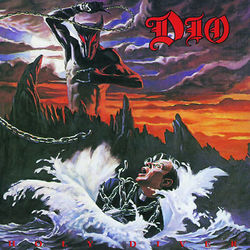
The contrast is easiest to hear next to the metal that was actually charting at the time. Ronnie James Dio's "Straight Through The Heart," from 1983, is theatrical, arena-ready heavy metal, the kind of well-dressed sound Ulrich and Hetfield were reacting against when they started writing songs built for speed instead of spectacle.
Kill 'Em All and the Birth of Thrash
That reaction became a record in 1983: Kill 'Em All, released on the independent label Megaforce. Fast and riff-driven, uninterested in polish, it gave the emerging Bay Area scene its name and its template. There was no commercial category called thrash metal before Kill 'Em All; after it, a whole movement was chasing the same tempo. The RIAA later certified the album 4x Platinum, a modest number next to what came later, but a first step with no ceiling in sight yet.
Ride the Lightning and Master of Puppets — and the Loss of Cliff Burton
The next two albums turned an underground sound into an underground institution. Ride the Lightning (1984) sharpened the songwriting without sanding down the aggression, and it's gone on to be certified 6x Platinum. Master of Puppets (1986) was the leap: it became Metallica's first gold record, built around tracks like "Battery," "Orion," and the title track, and it's now certified 8x Platinum. It's also been recognized as the heaviest rock album ever selected by the Library of Congress for preservation in the National Recording Registry for being "culturally, historically, or aesthetically significant," and the title track joined "Enter Sandman" and "Nothing Else Matters" as the third Metallica song in Spotify's Billions Club. The triumph came with tragedy: bassist Cliff Burton died in a tour bus accident in 1986, just after the album had made Metallica thrash's most ambitious band. If you want to hear how fast and uncompromising the broader thrash underground sounded in this window, Metallica's peers are all over LaLaQuiz's Metal quiz and the site's deeper breakdown of thrash vs. death metal vs. metalcore.
Genre Quiz
Think you know Metal?
Listen to real song clips and prove it — free, no signup needed.
The Black Album: Trading Speed for Scale
By 1990, Metallica had every reason to keep making faster, denser records for an underground that already loved them. Instead, the self-titled 1991 album (universally known as the Black Album) did the opposite. The tempos slowed and the arrangements simplified; the songs were built to fill arenas rather than clubs. It worked immediately: the album debuted at No. 1 in ten countries, including a four-week run at the top of the U.S. chart, and produced five singles: "Enter Sandman," "The Unforgiven," "Nothing Else Matters," "Wherever I May Roam," and "Sad But True." Critics came around just as fast, with the record landing in the top ten of the 1991 Village Voice Pazz & Jop poll and later becoming a fixture on Rolling Stone's list of the 500 greatest albums ever made. Thrash-metal lifers had become hard rock superstars in the space of a year.
Enter Sandman at Tushino Airfield
In September 1991, Metallica played the Monsters of Rock festival at Tushino Airfield outside Moscow, debuting "Enter Sandman" in front of a crowd bigger than any metal band had drawn before: a thrash band out of a Los Angeles garage, now playing to an audience that size.
Metallica - Enter sandman (live in Moscow 1991) HD · YouTube
Summer 1992: Co-Headlining Stadiums with Guns N' Roses
The Moscow show was a preview; the real confirmation came the following summer. On May 12, 1992, Lars Ulrich and Guns N' Roses guitarist Slash held a press conference at the Hollywood club Gaslight to announce a co-headlining stadium tour, kicking off July 17 at RFK Stadium in Washington, D.C. "Taking the two biggest bands from one genre of music and putting them together is unprecedented," Ulrich said at the announcement. The logistics were negotiated at a Los Angeles restaurant between Ulrich, Axl Rose, Slash, Hetfield, and their managers: Metallica would open (to avoid being dragged down by Guns N' Roses' notoriously late start times), Faith No More would support after Nirvana's Kurt Cobain turned the slot down, and the nightly guarantee ran about $750,000 per show. As Ronnie James Dio put it at the time, "When you have to get Guns N' Roses and Metallica on the same tour to sell tickets, it shows everyone that you have to put real big packaging together to make a difference." Metal's commercial muscle wasn't confined to one band that summer. Pantera's "Fucking Hostile," also from 1992, was tearing through the same scene with the same uncompromising attitude Metallica had started with a decade earlier.
The tour nearly ended before it got far.
What the Certifications Prove
Strip away the narrative and the RIAA numbers tell the same story in receipts: a steady climb from Kill 'Em All through Master of Puppets, then a jump to 20x Platinum (the RIAA equivalent of 2x Diamond) for the Black Album.
| Album | Release Year | RIAA Certification |
|---|---|---|
| Kill 'Em All | 1983 | 4x Platinum |
| Ride the Lightning | 1984 | 6x Platinum |
| Master of Puppets | 1986 | 8x Platinum |
| Metallica (Black Album) | 1991 | 20x Platinum / 2x Diamond |
The Black Album kept selling for decades: in 2009, it surpassed Shania Twain's Come On Over to become the best-selling CD of the SoundScan era. That commercial pull carried into the records that followed, including 1997's "Fuel," which shows how completely the arena-built sound from the Black Album had become Metallica's default mode.
Twelve years, five studio albums, a Moscow airfield, and a stadium tour with Guns N' Roses: that's the actual math behind "Metallica broke mainstream." If you want to test how well you know the riffs that got them there, or the wider heavy metal and hard rock scenes that shaped them, the band's catalog is waiting in LaLaQuiz's full Metal quiz.
Genre Quiz
Think you know Metal?
Listen to real song clips and prove it — free, no signup needed.
Frequently asked questions
When did Metallica form and why?
Metallica formed in Los Angeles in 1981 when drummer Lars Ulrich and guitarist/vocalist James Hetfield connected over a shared frustration with the glossy, glam-leaning hard rock dominating the era. They built a faster, rawer alternative that would eventually be called thrash metal.
Why is Kill 'Em All considered the birth of thrash metal?
Released in 1983 on the independent label Megaforce, Kill 'Em All set the template that thrash metal would follow for the rest of the decade: breakneck tempos, aggressive riffing, and a rejection of the polished arena-metal sound of the time. It later went on to be certified 4x Platinum by the RIAA.
What happened to Metallica's bassist Cliff Burton?
Cliff Burton died in a 1986 tour bus accident shortly after Master of Puppets had made the band thrash's most ambitious act. The album went on to become the heaviest rock record ever selected for preservation in the Library of Congress's National Recording Registry.
Why did Metallica change its sound for the Black Album?
The 1991 self-titled album, known as the Black Album, slowed the tempos and simplified the arrangements to build songs built for arenas and stadiums rather than clubs. It worked: the record hit No. 1 in ten countries, spent four weeks at No. 1 in the U.S., and produced five singles including "Enter Sandman" and "Nothing Else Matters."
What happened to James Hetfield during the 1992 Guns N' Roses tour?
On August 8, 1992, in Montreal, Hetfield suffered third-degree burns when he walked into a pyrotechnics malfunction onstage. Metallica had to cut the set short, the crowd rioted and caused roughly $600,000 in damage, and former Metallica guitar tech John Marshall filled in on rhythm guitar for the rest of the tour while Hetfield's arm healed.
Sources
- Gold & Platinum — Metallica — RIAA
- Metallica's Self-Titled 'Black Album' And 'Master Of Puppets' Receive Landmark RIAA Certifications — uDiscover Music
- The Day Guns N' Roses and Metallica Announced Co-Headlining Tour — Ultimate Classic Rock
- Metallica Receives More Platinum, Gold Certifications From RIAA — Blabbermouth.net
- Guns N' Roses/Metallica Stadium Tour — Wikipedia