House vs. Techno vs. Trance vs. Dubstep: How to Actually Tell EDM Subgenres Apart by Ear


Most EDM explainers define house, techno, trance and dubstep in isolation, which is useless the moment a DJ actually plays one. This guide gives you the BPM ranges and rhythmic tells — swing, drive, build-and-break, half-time wobble — that let you name the subgenre within seconds of the first bar.
Why BPM Alone Won't Tell You the Genre
Pull up a BPM counter, clock the track at 128, and you still don't know what you're listening to. According to Ableton's own producer-education tool, house typically runs 115-130 BPM, techno and trance both commonly sit in the 120-140 BPM zone, and dubstep runs 135-145 BPM. A track at 128 BPM could legitimately be house, techno, or trance. Tempo gives you a neighborhood, not an address.
The real identifiers are rhythmic: how the kick drum behaves, whether the groove swings or stays mechanically dry, where the snare lands in the bar, and what the track does with tension over time. Learn those four tells and the BPM counter becomes decoration.
House: 115-130 BPM and the Four-on-the-Floor Swing
House music runs on the simplest pattern in dance music: a kick drum on every single beat, known as four-on-the-floor. What makes it house instead of techno is the swing. The hi-hats sit slightly off the grid. The groove has a looseness that feels played rather than programmed, and the whole thing carries a warmth that traces back to the genre's Chicago roots, where DJs like Frankie Knuckles built the template at clubs like the Warehouse.
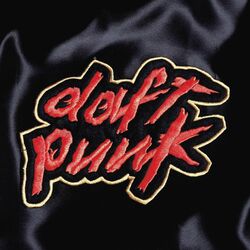
Daft Punk's "Revolution 909" is a perfect entry point: a thumping four-on-the-floor house groove wrapped around a sample of a police radio dispatch, written as a tribute to the French house parties the duo's own scene got raided over. Listen for the swing in the hats and the way the groove feels danced rather than clocked.
If house's warmth is your entry point into electronic music, the House quiz is the natural next stop.
Techno: 120-140 BPM and the Mechanical Drive
Techno uses the same four-on-the-floor kick as house, but strips out the swing entirely. The result is dry and repetitive, built by machine rather than played by hand: a pulse, not a groove. That's not an accident. Techno was born in Detroit in 1983 with the Belleville Three (Juan Atkins, Derrick May and Kevin Saunderson), and Atkins described the genre as "music born out of technology," made with synthesizers, sequencers and drum machines to reflect a world moving from industrial labor toward technological futurism. The genre is still celebrated every Memorial Day weekend at Detroit's Movement Electronic Music Festival, and the sound has since become especially dominant across European club culture.
Scottish duo Slam's "Positive Education" is a textbook case of that dry, hypnotic repetition: minimal melodic ornamentation, maximal mechanical drive.
If that stripped-down, machine-built pulse is your thing, the Industrial quiz sits right next door stylistically.
Trance: 120-140 BPM and the Build-and-Break Structure
Trance de-emphasizes the kick almost entirely compared to house and techno, pushing a melodic lead synth to the front and structuring the track around tension and release: a long build, a euphoric peak, and a breakdown that strips everything back before building again. The genre took shape in the late 1980s and early 1990s across the UK, Germany, Belgium and the Netherlands, drawing on house, techno, acid house, chill-out, classical and even film-score influences.
Ferry Corsten's Gouryella project is a canonical trance reference point: tracks like "Tenshi" are built almost entirely around that build-peak-breakdown arc rather than a driving kick, making it the clearest record to study the structure in isolation.
Genre Quiz
Think you know Electronic?
Listen to real song clips and prove it — free, no signup needed.
Dubstep: A 140 BPM Track That Feels Like 70
Dubstep emerged in South London in the early 2000s as a UK garage offshoot, blending 2-step rhythms and sparse dub production with elements of broken beat, grime and drum and bass. The genre is defined by syncopated rhythmic patterns, prominent basslines and a dark tone, qualities that first got airtime through London's Forward (FWD>>) night at Plastic People and the pirate station Rinse FM. BBC Radio 1 champions like John Peel in 2003 and Mary Anne Hobbs helped too, her 2006 "Dubstep Warz" show pushing the sound into the mainstream.
The tell that makes dubstep unmistakable, though, is rhythmic sleight of hand: the snare lands on beat 3 instead of the usual 2-and-4, which tricks the ear into hearing a half-time groove. Kid Cudi's "Pursuit Of Happiness (Nightmare)" (the Steve Aoki-helmed dubstep remix) makes that half-time wobble the entire hook, with sub-bass carrying the melody where a lead synth would normally sit.
The Side-by-Side Checklist
Keep this open on a second screen the next time you're trying to name a track mid-song.
| Genre | BPM Range | Kick Pattern | Bass/Lead Focus |
|---|---|---|---|
| House | 115-130 | Four-on-the-floor, swung hi-hats | Soulful bass, warm chords, vocal chops |
| Techno | 120-140 | Four-on-the-floor, dry/mechanical | Hypnotic, repetitive bassline, minimal lead |
| Trance | 120-140 | De-emphasized, buried in the mix | Melodic lead synth; build-peak-breakdown arc |
| Dubstep | 135-145 (feels ~70 via half-time) | Snare on beat 3, not 2-and-4 | Wobble sub-bass carries the hook |
Train Your Ear: A 4-Track Listening Drill
Run through these four in order and name the tell before the second drop:
- House (Daft Punk, "Revolution 909"): listen for the swing in the hats.
- Techno (Slam, "Positive Education"): listen for the dry, repetitive drive with no swing.
- Trance (Gouryella, "Tenshi"): listen for the kick fading out as the lead synth takes over, then the build back up from the breakdown.
- Dubstep (Kid Cudi, "Pursuit Of Happiness (Nightmare)"): listen for the snare landing on 3, making the whole track feel half as fast as it is.
Test Your Ear-Training
0/3The kick is steady and dry, with almost no swing in the hi-hats — just a relentless, machine-like pulse. What are you hearing?
The kick is quiet and buried in the mix, a melodic lead synth dominates, and the track spends 30+ seconds building tension before a big release. Which genre's structure is this?
You count the snare and it's landing on beat 3 instead of 2-and-4, making a fast track feel oddly slow. What's the tell?
Common Mix-Ups and How to Resolve Them
- Deep house vs. tech house: Both keep house's swing, but tech house borrows techno's drier, more repetitive percussion and darker tone. Think of it as house with techno's mechanical discipline layered on top.
- Progressive trance vs. techno: Progressive trance can shed trance's big euphoric peaks for a more understated, techno-adjacent groove, but it still keeps the kick de-emphasized relative to the melodic lead. That's the giveaway.
- Dubstep vs. drum and bass: Drum and bass runs much faster on paper, typically 160-180 BPM, but because dubstep's half-time snare placement makes it feel like 70, the two can momentarily seem to share a pocket. Count the snare hits, not the kicks, to tell them apart.
- Brostep and riddim: Both are derivative forms of dubstep that push the wobble bass harder and the dub influence further into the background, still built on that same snare-on-3 half-time foundation.
If house, techno, trance and dubstep sound closer to disco and acid house than you'd expect, that's covered in the site's 50-year history of dance music.
Now put the checklist to work where it actually counts: the Electronic genre quiz throws 30-second clips at you with no labels attached, so you can practice naming the subgenre by ear instead of just reading about it.
Genre Quiz
Think you know Electronic?
Listen to real song clips and prove it — free, no signup needed.
Frequently asked questions
What is the main difference between house and techno?
Both use the same four-on-the-floor kick pattern, but house swings: its hi-hats and groove carry a soulful, human looseness that traces back to Chicago's early house scene. Techno strips that swing out entirely, producing the dry, repetitive, machine-built pulse that Detroit's Belleville Three (Juan Atkins, Derrick May, Kevin Saunderson) built the genre around starting in 1983.
What BPM range is most EDM music?
It varies by subgenre: house typically sits at 115-130 BPM, techno and trance overlap in the 120-140 BPM zone, and dubstep runs 135-145 BPM. Because house, techno and trance share so much tempo territory, BPM alone can't reliably separate them. You need the rhythmic tells.
Why does dubstep feel so much slower than its BPM suggests?
A dubstep track is typically produced at around 140 BPM, but the snare hit lands on beat 3 instead of the usual 2-and-4 pattern found in most dance music. That shift makes the ear perceive the groove as half-time, so a 140 BPM track feels closer to 70, which is why dubstep is often the easiest of the four genres to identify by feel alone.
Is trance just a faster, melodic version of techno?
Not quite. Trance emerged in the late 1980s and early 1990s across the UK, Germany, Belgium and the Netherlands, pulling from house, techno, acid house, chill-out and even classical and film-score influences. Its structure is defined less by raw speed than by a de-emphasized kick, a melodic lead synth up front, and a build-peak-breakdown arc that techno generally doesn't follow.
How did dubstep get its name and where did it start?
Dubstep originated in South London in the early 2000s as an offshoot of UK garage, blending 2-step rhythms with sparse dub production and elements of broken beat, grime and drum and bass. The term first appeared around 2001 and was used by labels like Big Apple and Tempa by 2002, with BBC Radio 1's John Peel and later Mary Anne Hobbs's 2006 'Dubstep Warz' show helping push the sound beyond its underground club roots at Plastic People's FWD>> night.
Sources
- Trance music — Wikipedia
- Dubstep — Wikipedia
- How late Detroit techno pioneer Juan Atkins redefined electronic music — Michigan Public
- Tempo and genre — Ableton (Learning Music)
- The 13 best mid-2000s dubstep tracks — Mixmag