How to Pick a Walk-Up Song That Actually Pumps Up a Crowd, by Tempo and Genre
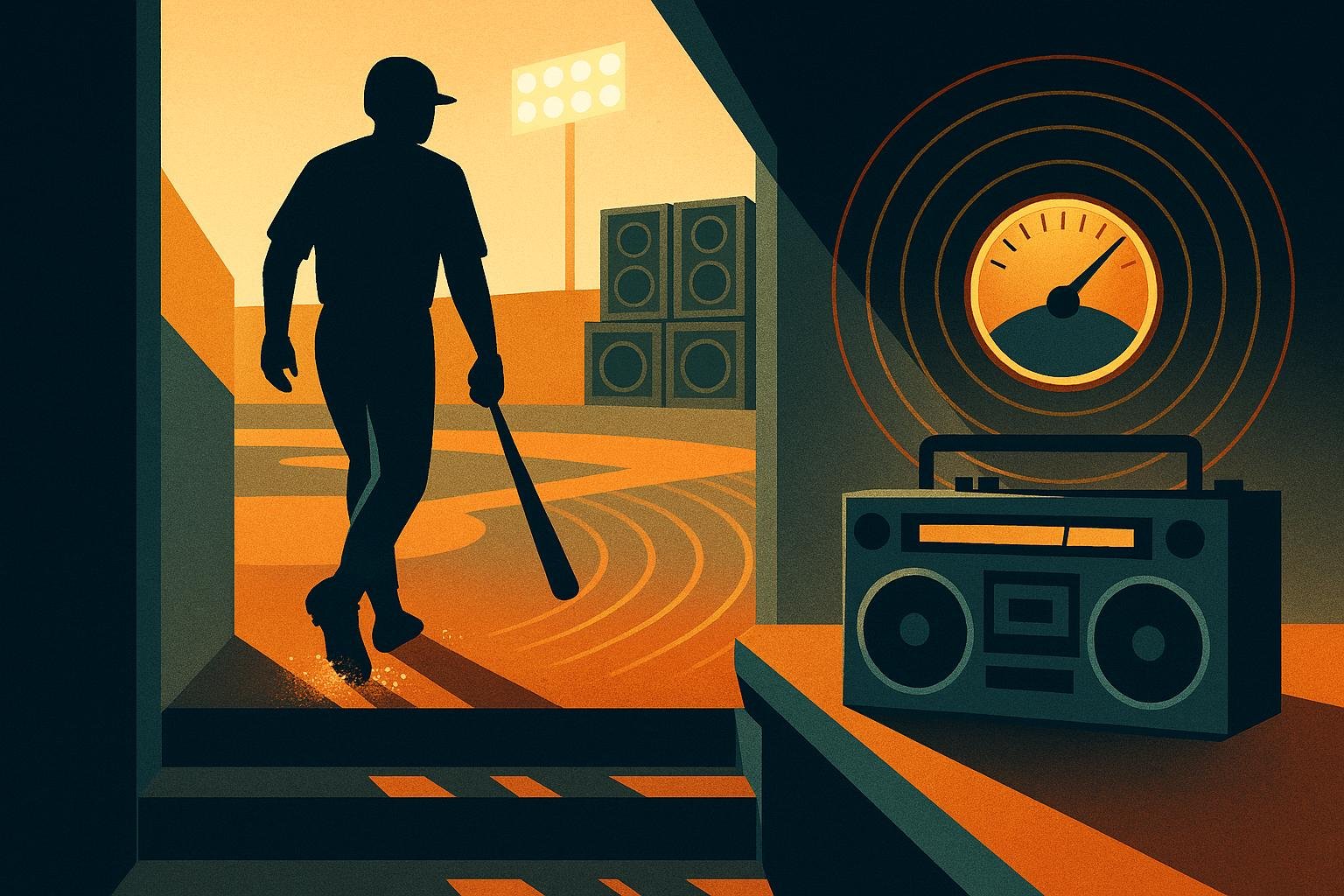
Every rec-league hitter and Little League parent eventually googles "best walk up songs" and gets a listicle instead of a plan. This guide swaps the vibes-based approach for a tempo framework: which BPM zones actually raise crowd energy, where your favorite genre really sits on the scale, and how to time the hook so it lands the second the batter steps in.
Why Tempo Beats Genre
Search "best walk up songs" and you'll get a genre-sorted listicle: hip-hop here, rock there, country over on the side. That's backwards. What actually raises a crowd's energy, and a hitter's own adrenaline, is tempo, not the genre label on the track. A 75 BPM trap song with a hard-hitting bassline can generate more visible crowd reaction than a 140 BPM rock song with a slow build, because BPM is the variable that maps most directly onto perceived energy and urgency. Genre tells you an instrument palette. Tempo tells you how a room is going to feel in the next ten seconds.
Most walk-up song advice, including the well-meaning genre-sorted lists at jokermag.com, still treats hip-hop, rock and pop as interchangeable buckets of "hype." They aren't.
The Three BPM Zones
- Slow-burn (60-90 BPM). Laid-back, groove-driven tracks that let a hitter's swagger do the work instead of the tempo. This is where most hip-hop and trap actually lives: deceptively chill on paper, menacing in context.
- Mid-tempo lock-in (100-130 BPM). The workhorse zone. Pop, rock and house tracks in this range give a crowd something to clap or nod along to without overwhelming the moment, and they work in any spot in the lineup.
- Fast-tempo hype (130+ BPM). Trance, punk and drum-and-bass-adjacent tempos built for one job: an immediate spike in energy. Use these sparingly, or they stop feeling special.
The mistake most hitters make is picking a song they like and assuming the zone will take care of itself. It won't. A favorite song in the wrong zone for the moment can fall flat even if it's objectively a great track.
Genre-by-Genre Tempo Cheat Sheet
Genre alone is a bad energy predictor, because BPM ranges vary wildly within a single genre tag and overlap heavily across genres. Here's where the major genres actually sit, based on typical production tempos (taptempobpm.com):
| Genre | Typical BPM Range | Best Game Moment |
|---|---|---|
| Hip-Hop / Trap | 60-100 BPM | Confident entrance, any lineup spot — swagger over speed |
| Pop | 100-130 BPM | Crowd sing-along for a fan-favorite mid-lineup bat |
| Rock / Alternative | 110-140 BPM | Cleanup hitter's power at-bat |
| House (Deep, Tech) | 115-130 BPM | Rally-starting at-bat, building steady energy |
| Trance | 125-150 BPM | Late-inning tension release |
| Punk / Hardcore | 160+ BPM | Two-strike, must-produce swing |
Notice hip-hop sits at the slow end of this table, not the fast end. That's the opposite of what most "hype song" assumptions expect. Hear how a different genre's tempo actually feels in context on the Rock quiz or Electronic quiz, a fast way to build an ear for it.
Nailing the 8-to-15-Second Window
Most leagues, from MLB stadiums down to rec softball, give a hitter roughly 8 to 15 seconds of music between the dugout and the box. That means the loudest, most recognizable part of the song needs to be cued to hit right as the walk begins, not buried a minute into the track. Sites that compile walk-up songs increasingly publish exact cue points for this reason: jokermag.com recommends starting Mobb Deep's "Shook Ones, Pt. II" at the 0:20 mark, SoFaygo's "Hell Yeah" at 0:12, and Meek Mill's "Gave Em Hope" at 0:36, all timed so the hook, not the intro, is what the crowd actually hears.
MC Hammer's "U Can't Touch This" is a useful case study for this window: the horn stab and "stop, Hammer time" hook is instantly recognizable within the first few seconds, which makes it almost impossible to mistime. That's the standard to hold your own pick to. If you have to explain which part is the good part, you've picked the wrong cue point.
Match the Song to the Moment
Once you know your BPM zones, matching a song to a lineup spot or game situation becomes a checklist instead of a vibe check:
- Leadoff hitters benefit from slow-burn or mid-tempo tracks that establish identity without overselling the moment. A trap or hip-hop pick in the 70-90 BPM range, like the pocket Migos' "Slippery" sits in, works because it's confident without shouting.
- Cleanup and power spots can carry a heavier mid-to-upper-tempo rock or pop track (110-140 BPM). The moment already has weight, so the song should reinforce it rather than create it.
- Late-inning rally situations are where fast-tempo tracks (130+ BPM) earn their keep. LMFAO's "Party Rock Anthem" is built exactly for this: an anthemic, crowd-known build into a drop that gives a stadium or a scrappy rec-league bleacher section permission to get loud right when the moment needs it.
Genre Quiz
Think you know Hip-Hop?
Listen to real song clips and prove it — free, no signup needed.
Test Your Ear: Guess the BPM Zone
0/3MC Hammer's "U Can't Touch This" built its walk-up-worthy hook around a horn stab everyone recognizes in two seconds. Which BPM zone and game moment does its upbeat, driving groove actually belong to?
Migos' "Slippery" sits in the classic trap pocket — laid-back but bouncy. Which BPM zone does trap music typically occupy, and what kind of at-bat does that groove actually suit?
LMFAO's "Party Rock Anthem" is built for a big, anthemic drop. Which game situation is that kind of high-BPM build-and-release structure actually best suited for?
A Brief History of Why This Even Matters
Walk-up music didn't start as a personal statement. It started as one organist's instinct. In 1970, Chicago White Sox organist Nancy Faust began riffing off broadcaster Harry Caray's commentary, pairing songs to specific players almost as inside jokes: Carole King's "I Feel the Earth Move Under My Feet" for Frank Howard after Caray called him "too big to be a man, not big enough to be a horse," and Jesus Christ Superstar for Dick Allen, which stuck after he homered the first time it played (PBS SoCal).
The ritual got more personal in the 1990s. In 1994, Philadelphia's John Brazer found himself taking real requests from Lenny Dykstra, who wanted Hootie and the Blowfish's "Hold My Hand" for his first at-bat, Tom Petty's "Won't Back Down" for his second, and Elton John's "Philadelphia Freedom" for his third: full superstition, player-driven, nothing left to a marketing department (ESPN). The moment that made walk-up music a genuine decision and not just a stadium quirk came in June 1995, when rookie Derek Jeter requested Montell Jordan's "This Is How We Do It" for his first at-bat at Yankee Stadium. Decades later, Cody Bellinger turned the Eagles' laid-back "Hotel California" into something "a little more menacing" just by having it soundtrack a 47-home-run MVP season. The song itself mattered less than how deliberately it was chosen.
Build Your Own Walk-Up Song in 5 Steps
- Pick your zone first. Decide whether the moment calls for slow-burn, mid-tempo, or fast-tempo energy before you even think about genre.
- Shop within that zone. Use the BPM cheat sheet above to filter genres, not the other way around.
- Find the 8-to-15-second hook. Scrub to the loudest, most recognizable section of the song and note the exact timestamp.
- Cue it to your walk, not the intro. Set your start point so the hook lands the moment you leave the dugout or step out of the on-deck circle.
- Test it on a real crowd. A song that sounds great in headphones can play differently through a PA. Adjust the cue point after one live at-bat if it doesn't land right.
Sharpen your ear for tempo and hooks before you commit to a pick. Test what you know against real tracks, including some of the ones above, on the Hip-Hop quiz.
Genre Quiz
Think you know Hip-Hop?
Listen to real song clips and prove it — free, no signup needed.
Frequently asked questions
What BPM is best for a walk-up song?
There's no single right answer. It depends on the moment. Mid-tempo songs in the 100-130 BPM range work as reliable, crowd-friendly defaults, while 130+ BPM tracks are better saved for rally situations where you want an immediate jolt. The key is matching BPM to the energy the at-bat actually needs rather than defaulting to whatever's trending.
Do baseball walk up songs have to be hip-hop?
No. Hip-hop and trap actually sit in a slower 60-100 BPM pocket, which is why genre alone is a poor predictor of hype. Rock, pop, house and even trance tracks can hit just as hard at the plate. What matters is the BPM zone and how the hook is timed, not the genre label on the streaming app.
How long should a walk-up song play before you reach the batter's box?
Most stadiums and rec leagues give a hitter roughly 8 to 15 seconds of music, so the loudest, most recognizable part of the song, the hook, chorus, or drop, needs to be cued to start right as you leave the dugout, not buried a minute into the track.
Who started the walk-up song tradition in baseball?
Organ music laid the groundwork starting in 1970, when Chicago White Sox organist Nancy Faust began pairing songs to specific players and moments, according to MLB.com via PBS SoCal. The tradition became a personal, player-driven ritual in the 1990s, and Derek Jeter's 1995 at-bat entrance to Montell Jordan's "This Is How We Do It" is widely credited as the moment it became a real decision players obsess over.
What are some good walk-up song ideas for different lineup spots?
Slower, 60-100 BPM hip-hop or trap tracks work well for confident, personality-driven entrances anywhere in the order. Mid-tempo pop or rock (100-140 BPM) suits cleanup and power spots. Faster house, trance or punk tracks (125 BPM and up) are best saved for late-inning rally at-bats where the crowd needs an immediate energy spike.