The History of Electronic Music: From Buchla Synths to the Global EDM Boom
Electronic music's history isn't abstract — it's a chain of specific machines and singles. A San Francisco synth builder, a sequenced disco single, a Chicago DJ's residency, and a pair of Belleville teenagers each pushed the sound forward, until it filled festival fields worldwide.
Electronic music didn't start in a club. It started in a studio, with a wall of patch cords and a physicist who refused to build a piano-shaped instrument. Every big pivot since then — disco's first fully sequenced hit, a record-shop request in Chicago, a Belleville teenager's first synthesizer — pushed the sound one step closer to the festival stages it fills today.
From modular synth to main stage
1963
The Buchla 100 series is commissioned
Morton Subotnick and Ramon Sender of the San Francisco Tape Music Center ask Don Buchla to build a modular system with a 16-stage sequencer — no piano keyboard required.
1967
Silver Apples of the Moon
Morton Subotnick composes his landmark electronic album on a Buchla unit.
1977
'I Feel Love' is released
Giorgio Moroder, Pete Bellotte and Donna Summer's entirely sequenced Moog single reshapes dance music.
1977
Frankie Knuckles takes the Warehouse residency
His five-year run in Chicago gives house music its name and its sound.
1983
Cybotron's Enter
Juan Atkins and Richard Davis fuse Kraftwerk and Parliament into Detroit's machine-funk debut album.
1985
Model 500 and Metroplex
Atkins goes solo and starts his own label, codifying the Detroit techno blueprint.
2005
Tomorrowland launches in Boom, Belgium
About 10,000 attendees watch Sven Väth, Sasha, Armin van Buuren and Justice at the festival's first edition.
Before the Studio Was an Instrument — Don Buchla, Morton Subotnick and the San Francisco Tape Music Center build the first voltage-controlled modular system without a piano keyboard (1963-1968)
Don Buchla studied physics, physiology and music at UC Berkeley, and came up through musique concrète's world of splicing tape by hand. In 1963, Morton Subotnick and Ramon Sender, founders of the San Francisco Tape Music Center, asked him to build something different: an instrument made of separate modules, each one able to shape a sound's pitch, timbre or volume independently. The result, the Buchla 100 series, included a 16-stage sequencer — the first way to control the movement of electronic music in real time, without physically cutting and taping reels together.
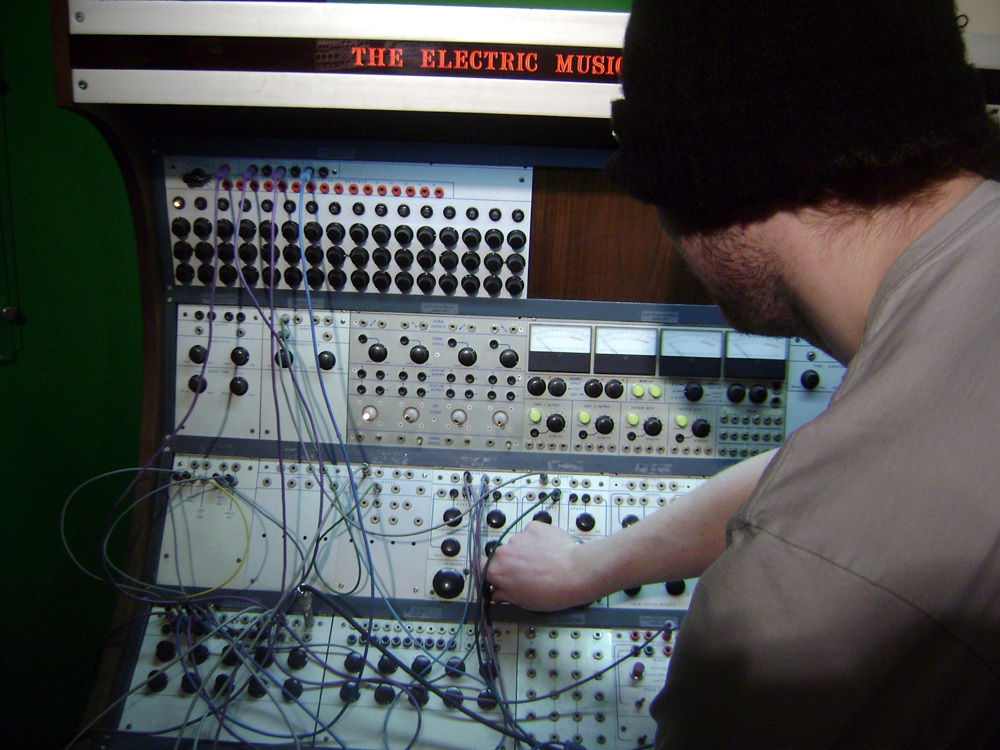
This was a deliberate break from what would become known as East Coast synthesis, Bob Moog's keyboard-centric approach built for musicians trained on piano. Buchla's West Coast philosophy favored intuition and chance over familiar note-by-note control, which is why, as techno producer Surgeon later put it, "there's something about Buchla instruments that attracts odd people." Subotnick used a Buchla unit to make his seminal 1967 album Silver Apples of the Moon, and later passed the machine to folk singer Buffy Sainte-Marie for her album Illuminations. Buchla's circle in this period was genuinely strange by design — he built sound systems for Ken Kesey's Merry Pranksters and their bus Further, worked the 1966 Trips Festival, did sound for the Grateful Dead, and took contracts with NASA in between. If you want to hear what that West Coast, keyboard-free lineage sounds like today, our Experimental quiz is a good place to start.
Disco Learns to Sequence — Giorgio Moroder and Donna Summer's Moog-driven 'I Feel Love' turns a dance single into a blueprint for house and techno (1977)
Fourteen years after the first Buchla sequencer, sequencing hit the pop charts. Producers Giorgio Moroder and Pete Bellotte, working with Donna Summer, built "I Feel Love" around a clinical, pulsating bassline generated on Moroder's Moog modular system, with an entirely synthesized rhythm that dropped disco's usual orchestral backing altogether. Brian Eno reportedly said in 1977, "this single is going to change the sound of club music for the next 15 years" — and he undersold it. The track followed closely behind Kraftwerk's Trans-Europe Express as an early landmark of electronic pop, and directly influenced the house and techno producers who came after.
Moroder's relationship with synthesizers actually started earlier: in 1970, an engineer named Robbie Wedel introduced him to composer Eberhard Schöner's enormous modular rig in Munich, and Moroder's first synth-driven production followed on 1972's "Son of My Father" (a UK number one in its cover version by Chicory Tip). By 1977, that fascination had turned into a fully sequenced club record. You can hear where that DNA lands today on our Dance quiz.
Chicago Invents a Genre — Frankie Knuckles' residency at The Warehouse and the record-shop request that gave 'house music' its name (1977-1986)
Frankie Knuckles learned to DJ alongside Larry Levan at New York's Continental Baths in the early 1970s. When Levan turned down a residency offer at a new Chicago club called the Warehouse in 1977, Knuckles took the job instead — and spent the next five years turning it into the hottest ticket in the city, mixing underground disco, obscure soul and muscular European electronic-disco records, sometimes re-editing them himself for the dancefloor. The residency was so popular that Chicago record shops began fielding requests for "Warehouse music" — shortened, eventually, to "house music."
Knuckles left the Warehouse in 1982 to open his own club, the Power Plant, where he pushed further into stripped-back drum-machine jams and early house tracks produced with Jamie Principle for the Trax and D.J. International labels. His growing reputation made him a major DJ draw in the UK as Chicago house spread internationally, and he didn't release his own debut album, Beyond the Mix, until 1991 — by which point the genre he'd named already belonged to the world. If house is your thing, our dedicated House quiz plays deep cuts from across the movement.
Belleville, Detroit and the Techno Blueprint — Juan Atkins, Cybotron and the Belleville Three fuse Kraftwerk and Parliament into a new machine sound (1980-1988)
Juan Atkins grew up in Detroit and moved to Belleville, Michigan after his parents split. In junior high there, he met Derrick May and Kevin Saunderson — the trio who would become known as the Belleville Three. At 15, Atkins bought his first synthesizer, a Korg MS-10, and by 1980 he'd formed Cybotron with Richard Davis, releasing the group's debut album Enter in 1983. As critic John Bush later described it, Atkins was welding "the more cosmic side of Parliament funk with the rigid computer synth pop embodied by Kraftwerk," filtered through sociologist Alvin Toffler's futurist ideas and dystopian science fiction.
Atkins and Davis split in 1985, and Atkins founded his own label, Metroplex, releasing solo material under the alias Model 500 — the records that effectively codified Detroit techno as its own genre, distinct from both Chicago house and the disco records that had inspired both cities.
| Year | Machine or Record | Key Figure | Why It Mattered |
|---|---|---|---|
| 1963 | Buchla 100 series (16-stage sequencer) | Don Buchla / SF Tape Music Center | First system to sequence electronic sound without splicing tape |
| 1977 | "I Feel Love" | Giorgio Moroder & Donna Summer | First disco hit built entirely on a sequenced Moog bassline |
| c.1977 | Korg MS-10 | Juan Atkins (age 15) | Introduced Detroit's future techno architect to synthesis |
| 1983 | Cybotron's Enter | Juan Atkins & Richard Davis | Debut album fusing Parliament funk with Kraftwerk's machine pop |
| 1985 | Model 500 / Metroplex label | Juan Atkins | Solo alias and label that codified the Detroit techno sound |
Genre Quiz
Think you know Electronic?
Listen to real song clips and prove it — free, no signup needed.
Rave Crosses the Atlantic — acid house and the UK/European underground turn Chicago and Detroit records into a continental youth movement (late 1980s-1990s)
By the late 1980s, Chicago and Detroit house and techno records had built an audience their home clubs couldn't contain: American house and techno 12-inches fed a fast-growing underground of UK and European club nights and warehouse parties. British and European producers didn't stop at importing the records. They answered them, building a homegrown rave culture around the same machine-driven aesthetic pioneered in the US.
One of the era's defining voices, Richard D. James, recording as Aphex Twin, emerged from this UK scene with tracks like 1992's "Pulsewidth" — as comfortable on a dancefloor as it is unsettling on headphones, and a good snapshot of how far the UK's own electronic underground had already drifted from straightforward house and techno by the early '90s.
That same UK/European scene now has its own lane on LaLaQuiz — check the IDM quiz if this is the sound you came for.
From Studio Racks to Laptops — digital production tools and superstar-DJ culture reshape how electronic music is made and sold (1990s-2000s)
The gear at the center of this story kept shrinking. Where Buchla and Moroder needed rooms full of cabinets and patch cords, the 1990s handed producers samplers and early digital audio workstations that fit on a desk. Parisian duo Daft Punk built their 1997 debut album Homework almost entirely in a home studio, and tracks like "Revolution 909" wear the Chicago and Warehouse lineage openly — a house record, made on drum machines and samplers instead of analog racks, named after a police raid on a Paris rave.
The same democratization that let two guys in a Paris apartment make a house record eventually reshaped the business side too: by the 2000s, DJs were headlining arenas and festivals on the strength of laptop sets and USB sticks rather than crates of vinyl, turning individual DJs into the kind of stadium-filling stars that disco and early house scenes never had.
The Pyramid, the Festival, the Global Boom — Daft Punk's Coachella stage and Tomorrowland's launch mark electronic music's move into a worldwide festival economy (2005-today)
On August 14, 2005, a first-of-its-kind festival opened in the small Belgian town of Boom. Tomorrowland drew a modest crowd of around 10,000 people for sets from Sven Väth, Sasha, Armin van Buuren, Erol Alkan and Justice — a scale that looks tiny next to the festival's current multi-continent editions, but the format was already in place: electronic music as a full-weekend destination event, not just a club night.
The following year, Daft Punk's pyramid-topped live show at Coachella became one of the most talked-about festival sets of the decade, widely credited with helping ignite the North American festival boom that followed. Watch the set that did it:
Daft Punk Live @ Coachella 2006 Full Set · YouTube
Start with a 16-stage sequencer built for a San Francisco tape studio. End with a lit-up pyramid in the California desert. In between, it's the same pattern on repeat: somebody builds a new machine, somebody takes a chance on a new sound, and the dancefloor eventually catches up. If you've been reading and mentally filling in the tracks, our Electronic quiz plays 30-second clips from across this exact history — a faster, ear-first way to learn electro music history than any timeline can offer.
Genre Quiz
Think you know Electronic?
Listen to real song clips and prove it — free, no signup needed.
Frequently asked questions
What is the history of electro music in one sentence?
Electronic music grew out of 1960s experimental studio instruments like Don Buchla's modular synthesizer, moved into pop via Giorgio Moroder's fully sequenced 1977 disco hit 'I Feel Love,' was shaped into house and techno by Chicago and Detroit DJs and producers in the 1980s, and became a global festival industry by the 2000s.
Who invented house music?
House music grew out of Frankie Knuckles' residency at Chicago's Warehouse club starting in 1977, where his sets of disco, soul, and electronic disco records became so popular that record-shop customers started asking for 'Warehouse music' — later shortened to 'house music.' Knuckles is widely credited as the genre's godfather.
How did techno start in Detroit?
Detroit techno began with Juan Atkins, Derrick May, and Kevin Saunderson, three friends from Belleville, Michigan who became known as the Belleville Three. Atkins first fused Kraftwerk's machine-driven pop with Parliament's funk as part of the group Cybotron in the early 1980s, then codified the Detroit techno sound solo as Model 500 through his own Metroplex label from 1985 onward.
What was the first electronic dance record?
There's no single 'first,' but Giorgio Moroder and Pete Bellotte's production of Donna Summer's 'I Feel Love' in 1977 is usually cited as the turning point — it was one of the first hit singles built on an entirely synthesized, sequencer-driven rhythm rather than a live band, and it directly influenced the house and techno producers who followed.
How to learn electro music history the fast way?
Follow the machines and the records rather than trying to memorize a genre family tree: start with Don Buchla's 1960s modular synths, then 'I Feel Love' in 1977, then Frankie Knuckles' Warehouse residency, then Juan Atkins' Detroit techno records, then the festival era that followed. Listening to the actual tracks tied to each moment sticks better than reading a timeline alone.
Sources
- The genius of Don Buchla, by the synth disciples he inspired — FACT Magazine
- Classic Tracks: Donna Summer 'I Feel Love' — Sound on Sound
- Frankie Knuckles on the Birth of House Music — Red Bull Music Academy Daily
- Juan Atkins — Wikipedia
- Tomorrowland 2005 — Tomorrowland (official)