How Well Do You Really Know 90s Music? A Decade-by-Decade Memory Test

The 90s didn't have one sound — it had at least three, stacked on top of each other and fighting for the radio dial. Flannel-clad grunge gave way to synchronized boy-band choreography, while hip-hop quietly rewired the entire pop charts. This is a decade-by-decade memory test disguised as a music history lesson, and it ends with a quiz that will humble even the most confident 90s kid.
The 90s Weren't One Decade — They Were Three
Ask someone to describe "90s music" and you'll get three completely different answers depending on when in the decade they were paying attention. Someone who came of age in 1992 will talk about flannel, distortion pedals, and Kurt Cobain. Someone who was twelve in 1998 will talk about frosted tips, synchronized dance breaks, and Lance Bass. Someone who spent the decade with a boombox will point to Dr. Dre, Mary J. Blige, and the moment rap stopped being a subculture and started being the culture. All three of them are right, and that's exactly what makes 90s songs trivia so much harder than it looks. It's not one test — it's three, stacked on top of each other, and most people only ace one of them.
That's the premise of this decade-by-decade memory test: walk through how 90s music actually evolved, era by era, and see how much of it you can genuinely place — not just recognize, but date. If you've read our deep dive on the history of grunge, you already know how fast that scene rose and fractured. Here's the fuller picture, and a 90s music quiz waiting at the end to prove you know it.
Act One: Grunge's Long Goodbye (1991–1994)
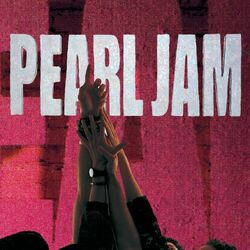
Nirvana's Nevermind dropped in September 1991 and by January 1992 had bumped Michael Jackson's Dangerous from the top of the Billboard 200 — a genuinely seismic upset that nobody at Geffen Records saw coming. Pearl Jam's Ten had actually come out a month before Nevermind, but it took the Nirvana explosion to drag the whole Seattle scene into the mainstream spotlight. Tracks like Pearl Jam's "Porch," a live-favorite deep cut from that debut album, capture what made the sound so different from anything on pop radio: raw, unpolished vocals, a rhythm section that sounded like it was recorded in a garage, and lyrics that didn't pretend everything was fine.
Grunge's commercial peak was brutally short. Cobain's death in April 1994 didn't kill the genre overnight, but it marked the point where the sound started splitting into two directions — heavier, angrier acts drifting toward what would become nu-metal, and poppier post-grunge bands like Stone Temple Pilots and Bush smoothing the edges for wider radio play. If you want to go deeper on that arc, our grunge history piece covers it in full, and you can test your ear for the era directly on the Grunge quiz or the broader Rock quiz.
Act Two: The Boy Band Takeover (1995–1999)
While grunge was fracturing, a completely different machine was warming up. Backstreet Boys released their US self-titled debut in 1997, and "Quit Playing Games (With My Heart)" became the song that announced boy bands weren't a passing fad — it hit the top five on Billboard and helped push that album past 14 million copies sold domestically. The formula behind it was almost industrial: Swedish producer Max Martin's ear for inescapable hooks, MTV's Total Request Live turning fan voting into appointment television, and a marketing strategy that treated teenage devotion as a renewable resource. NSYNC, 98 Degrees, and later Britney Spears all rode the same infrastructure Martin helped build.
It's a jarring pivot to make in the same decade as "Smells Like Teen Spirit," and that whiplash is exactly why so many people flatten the 90s into one vibe when they actually remember it in fragments. If bubblegum hooks and vocal harmonies are more your speed than distortion pedals, the Pop quiz is worth a run alongside the 90s set.
Decade Quiz
Think you know 90s?
Listen to real song clips and prove it — free, no signup needed.
Act Three: Hip-Hop and R&B Rewrite the Charts
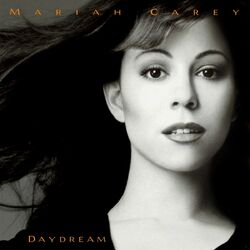
The most consequential 90s shift wasn't grunge or boy bands — it was hip-hop and R&B quietly becoming the dominant commercial force in American pop music. Early in the decade, rap crossover hits were still treated as novelties. By the mid-90s, that had completely inverted. Mariah Carey's "Always Be My Baby," from 1995's Daydream, is a useful marker of the shift: a pop vocalist working directly with hip-hop-informed producers, folding R&B phrasing and rhythm into a song built for top-40 radio rather than treating it as a separate lane.
By 1998, when Lauryn Hill's The Miseducation of Lauryn Hill was topping year-end best-of lists (it would go on to sweep the Grammys the following February) and Puff Daddy was a fixture on pop radio, the old genre borders had essentially dissolved. Hip-hop wasn't crossing into the mainstream anymore — it was the mainstream, sharing chart space with the boy bands and post-grunge holdovers from the decade's earlier acts. Curious how deep that catalog runs? The Hip-Hop quiz and R&B / Soul quiz both dig into that era specifically.
So, Which 90s Kid Are You?
Most people are fluent in exactly one of these three 90s — the one that was playing during their specific slice of adolescence — and hazy on the other two. That's not a knock; it's just how nostalgia works. The decade moved fast enough that 1992 and 1998 sound like they belong to different eras entirely, because in a lot of ways they do.
The 90s decade quiz pulls from a 696-track library spanning grunge, boy-band pop, hip-hop, and everything that filled the space between them, with 30-second clips that'll either land instantly or leave you staring at the play button in disbelief that you don't know a song you'd swear you grew up on. Decade-by-decade knowledge is one thing. Recognizing a track cold, with no title or artist name in sight, is the real test — go prove it.
Decade Quiz
Think you know 90s?
Listen to real song clips and prove it — free, no signup needed.
Frequently asked questions
What kind of songs are in a 90s music quiz?
A good 90s music quiz spans the whole decade's contradictions: grunge and alt-rock from Seattle, the Max Martin-engineered boy-band and teen-pop explosion, R&B crossovers, and the hip-hop singles that first cracked mainstream radio. LaLaQuiz's 90s decade quiz pulls from 696 tracks, so it covers the deep cuts alongside the obvious hits.
When did grunge peak and start to fade in the 90s?
Grunge peaked roughly between 1991 and 1994, driven by Nirvana's Nevermind, Pearl Jam's Ten, and Alice in Chains, then began fading commercially after Kurt Cobain's death in 1994 as the sound splintered into post-grunge acts like Stone Temple Pilots and Bush. By the back half of the decade, the alternative-rock label had stretched to cover much poppier, radio-friendlier bands.
Why did boy bands become so huge in the late 90s?
Boy bands like Backstreet Boys and NSYNC exploded because labels finally cracked the formula for selling to teenage girls at scale: Swedish pop producer Max Martin's hook-driven songwriting, MTV's Total Request Live giving fans a daily voting ritual, and marketing that treated fandom as a group activity. Backstreet Boys' 1997 self-titled US debut alone sold over 14 million copies.
How did hip-hop cross over into mainstream pop in the 90s?
Hip-hop crossed over through R&B collaborations and sample-heavy production that made rap-adjacent sounds radio-friendly, with artists like Mariah Carey working directly with hip-hop producers and rappers on remixes. By late in the decade, hip-hop and R&B were charting alongside boy bands and grunge holdovers rather than existing in a separate lane.
What's considered one of the best 90s songs of all time?
There's no single answer, which is the fun of it — Nirvana's 'Smells Like Teen Spirit,' Backstreet Boys' 'Quit Playing Games (With My Heart),' and Mariah Carey's 'Always Be My Baby' all top different lists depending on whether you're ranking cultural impact, chart performance, or pure songcraft. That's exactly the kind of debate a 90s songs trivia quiz is built to settle.